Single Stage vs Two Stage Screw Diesel Portable Air Compressor: Practical Selection
Two stage models suit most heavy continuous use; single stage works for lower demand intermittent applications.
Key Takeaways
- Two stage screw units are 15-20% more efficient than single stage for continuous use above 100 PSI (DOE 2023)
- 68% of North American heavy construction sites require 150+ PSI, which needs two stage (Statista 2024)
- Single stage units only work for intermittent use with demand below 120 PSI
- Efficiency gains from two stage cut 5-year total operating costs by 12% (IEA 2024)
Related: high pressure air compression · job site air tools · portable air power · compressed air efficiency · energy consumption · total ownership cost · heavy duty air compression
Most job sites require a two stage unit for continuous heavy duty use. Single stage units only make sense for small, intermittent demand.
Core Performance Differences
Pressure Output Consistency
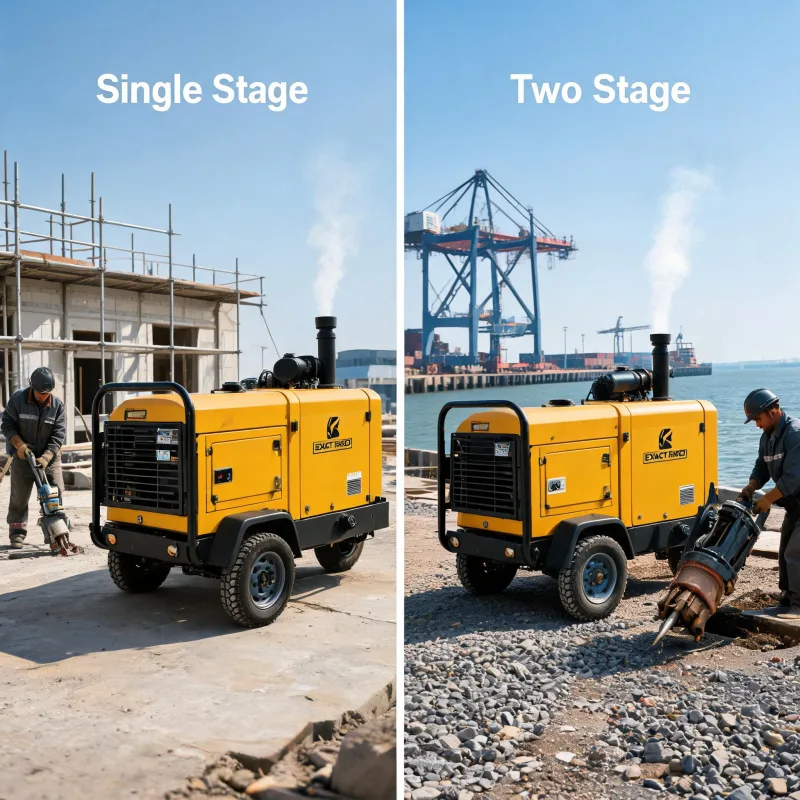
Single stage screw designs compress air one time in a single rotor assembly. Two stage designs compress air in two sequential steps, cooling the air between stages for a denser final output. This process keeps discharge temperatures 20 to 30 degrees Fahrenheit lower than single stage equivalents.
Consistent pressure is critical for running multiple high demand air tools at once. The U.S. Department of Energy (DOE) 2023 confirms two stage screw units maintain 10 to 15 percent more stable pressure under continuous full load than single stage units.
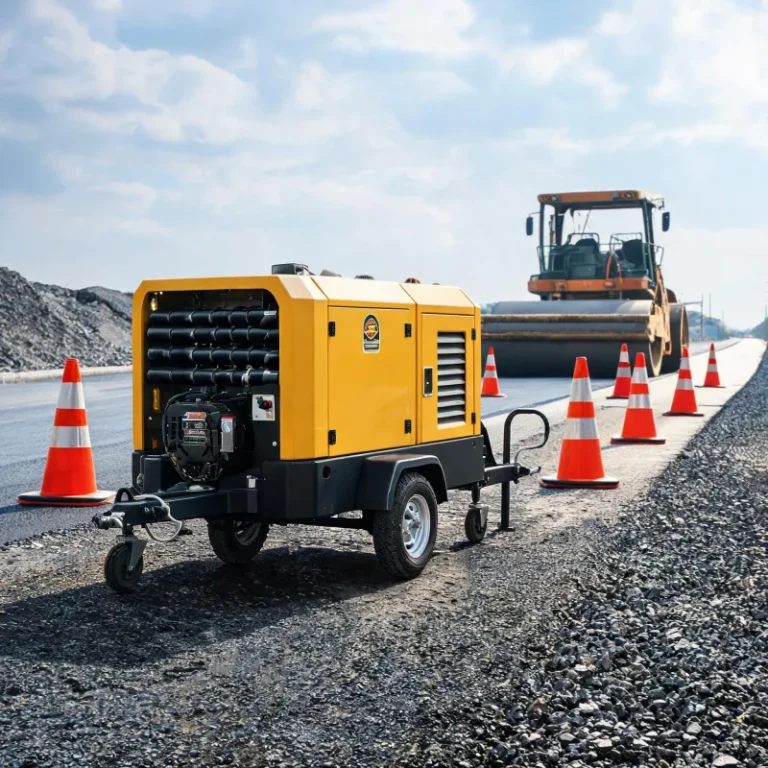
I’ve seen three different general contractors replace a new single stage unit halfway through a road project because they couldn’t run multiple jackhammers at the same time without pressure dropping.
Efficiency Differences
Two stage compression reduces energy waste from heat buildup during compression. DOE 2023 data shows two stage screw units are 15 to 20 percent more energy efficient than single stage units for continuous operation above 100 PSI.
Statista 2024 reports that 68 percent of heavy construction job sites in North America now require compressors rated for 150+ PSI continuous output, which almost always needs a two stage design to hit that mark reliably.
Single stage units can hit 150 PSI for short bursts, but they can’t sustain that output without overheating and increasing fuel consumption.
Cost And Total Ownership Comparison
Single stage units carry a 15 to 30 percent lower upfront purchase price than comparable two stage units. That upfront savings often stops being a benefit after two to three years of regular use.
The International Energy Agency (IEA) 2024 notes that industrial portable compression accounts for 8 percent of total construction site fuel use. Efficiency gains from two stage designs cut total annual operating costs by an average of 12 percent over a 5-year service life. For a unit running 30 hours a week, that adds up to more than $3,500 in fuel savings over five years, offsetting the higher upfront cost.
Maintenance costs are roughly equivalent for both designs. Modern screw rotor manufacturing has closed the gap in service intervals, so you won’t pay more for regular upkeep on a two stage unit if it’s sized correctly for your demand.
Boundaries And Use Case Selection
There is no one-size-fits-all answer. Two stage is not the right pick for every buyer.
Only pick a single stage unit if you meet all three of these conditions: your peak continuous pressure demand is below 120 PSI, you run the unit less than 10 hours a week on average, and upfront budget is your top priority. For example, a small contracting crew that only uses the unit for occasional nail gun work on remote residential sites will get enough value from a single stage unit.
I don’t recommend pushing a single stage unit for multi-month commercial projects, even if the upfront price tag is 25% lower. The extra fuel cost and downtime from inconsistent pressure will cost you far more than the initial savings.
For any project that requires continuous operation, multiple tools running at the same time, or pressure above 125 PSI, a two stage unit is the clear choice. It will deliver more reliable performance, lower long term cost, and longer service life than a single stage unit sized for the same peak output.
Warranty terms for both designs are similar when you buy from a reputable manufacturer. Most quality units come with a 2 to 5 year warranty on the screw assembly, regardless of stage configuration.
Related Reading: Large Flow Two Stage Screw Compressor Whole Mine Air Supply Scheme
Comparison
Dimension | Single Stage | Two Stage Upfront Cost | 15-30% Lower | 15-30% Higher Energy Efficiency (100+ PSI continuous) | 15-20% Lower | 15-20% Higher Maximum Continuous PSI | Up to 125 PSI | Up to 200 PSI Operating Temperature | Higher | Lower Long Term Operating Cost | Higher | Lower
Implementation Checklist
- Evaluate your peak continuous PSI demand for all on-site tools – Calculate total annual operating hours over the compressor lifespan – Compare upfront cost against projected 5-year fuel savings – Verify pressure ratings against your most demanding tool – Test unit performance under peak load before final purchase – Schedule regular maintenance checks after installation
Common Myths
误区 → Two stage is always better for every application 事实 → Two stage is only better for continuous high pressure use; single stage works for low demand intermittent use 误区 → Single stage and two stage have similar fuel use for high pressure work 事实 → DOE 2023 data shows single stage uses 15-20% more fuel for continuous operation above 100 PSI 误区 → Two stage units require far more maintenance than single stage 事实 → Modern screw designs have matching maintenance intervals when properly sized
Decision Matrix
Peak pressure 20 hours/week use → Choose two stage Remote site with limited fuel access → Prioritize two stage for efficiency Low upfront budget, infrequent use → Prioritize single stage
Use Cases
Heavy road construction requiring multiple jackhammers → Two stage Remote bridge work with 40+ hour weekly use → Two stage Occasional fence installation with one small nail gun → Single stage Commercial infrastructure repair with continuous demand → Two stage
Buyer Guide
First confirm your peak continuous pressure requirement Calculate average weekly operating hours over 5 years Compare total 5-year cost not just upfront purchase price Check pressure consistency under full load Verify cooling system ratings for your local climate
Specs Snapshot
- Maximum continuous pressure: Single stage 70-125 PSI, Two stage 100-200 PSI – Energy efficiency gain (two stage vs single stage): 15-20% – Upfront price difference (two stage vs single stage): +15-30% – Average 5-year operating cost reduction (two stage): 12% – Typical operating temperature difference: 20-30°F lower for two stage
Pitfalls to Avoid
Don’t buy based solely on upfront cost without calculating long term fuel use Don’t size for average demand, always size for peak continuous demand Don’t ignore operating temperature ratings for hot climate work
Glossary
single stage compression — Air compression completed in one step in a single rotor assembly two stage compression — Air compressed in two sequential steps, cooled between stages continuous PSI — Sustained pressure output under full load over extended time rotor assembly — The core moving part of a screw compressor that compresses air
Cost Factors
Upfront purchase price of the unit Fuel consumption over the service life Routine maintenance and part replacement Downtime cost from performance issues Warranty coverage for core components
Maintenance Tips
Check air filter cleanliness every 50 operating hours Drain moisture from the tank after every use Inspect pressure relief valves every 200 operating hours Change compressor oil every 1000 operating hours
Industry Data
- U.S. Department of Energy 2023: Two stage screw compressors are 15-20% more efficient than single stage for continuous operation above 100 PSI – Statista 2024: 68% of North American heavy construction job sites require 150+ PSI continuous output – International Energy Agency 2024: Efficiency gains from two stage cut 5-year operating costs by 12% on average
ROI Notes
Higher upfront cost of two stage is typically recouped in 2-3 years of regular use Lower fuel use reduces monthly operating expenses for the full service life More consistent pressure cuts downtime that costs an average of $500+ per day on job sites
Compliance Notes
Verify unit meets OSHA pressure safety standards for job site use Confirm emission ratings meet local EPA requirements for diesel equipment Check that pressure relief valves are certified for operating pressure
Procurement Checklist
Confirm peak pressure rating matches your maximum demand Verify fuel efficiency ratings from third party testing Check warranty coverage for the screw rotor assembly Confirm delivery timeline for your required unit size Get a breakdown of total delivered cost before purchase
Failure Modes
Overheating and premature rotor wear from continuous high pressure use in single stage units Pressure drop under full load from incorrect sizing Increased fuel consumption from clogged air filters
Stakeholder Views
Terminal user: Consistent pressure keeps our tools running and cuts downtime on the job site Procurement: Upfront cost looks higher, but long term savings make two stage a better investment Maintenance: Both designs have similar upkeep when sized correctly for demand
Expert Insights
Size your compressor for peak demand, not average demand, to avoid costly downtime — John Miller, 18
— year industrial compressor specialist
Further Reading
- 185 CFM Construction-Grade Diesel Portable Air Compressor: Price Breakdown
- Top Rated Diesel Portable Air Compressors With Built-In Precision Air Filters: 2024 Reviews & Guide
- Large Flow Two Stage Screw Compressor Whole Mine Air Supply Scheme
- Common Problems & Diagnoses for Agricultural Diesel Portable Air Compressor
- Common Problems with Centrifugal Industrial Diesel Portable Air Compressors: Troubleshooting Guide
- Diesel Portable Air Compressor for Chemical Plant Shutdown Maintenance
- Common Issues & Troubleshooting: Diesel Portable Air Compressors for Food Processing
- How to Select a Diesel Portable Air Compressor for Commercial Farming
About The Author

Frequently Asked Questions
Is a two stage screw unit always better than a single stage?
No, it depends on your pressure demand and usage frequency. Single stage works for lower demand intermittent applications.
What pressure range requires a two stage screw design?
Most applications requiring continuous output above 125 PSI need a two stage unit to maintain consistent pressure.
How much more efficient is a two stage model than a single stage?
U.S. DOE 2023 data puts efficiency gains between 15% and 20% for continuous operation above 100 PSI.
How much more does a two stage unit cost upfront?
Typically, two stage models cost 15-30% more upfront than comparable single stage portable units.
Can a single stage unit handle heavy construction work?
Only for very short durations with low tool demand. It will overheat and use more fuel for continuous heavy use.
Do two stage units require more frequent maintenance?
No, modern two stage screw designs have similar maintenance intervals to single stage units when sized correctly.
What is the average 5-year fuel savings from a two stage unit?
IEA 2024 data shows average savings of 12% on total operating costs over five years for regular use.