How Site Constraints Guide Towable Air Compressor Selection for Mine Shaft Sinking Drilling
Match your towable air compressor to on-site mine constraints to avoid unplanned downtime.
Key Takeaways
- Add 15% extra capacity to offset elevation and temperature derating
- Two-stage heavy filtration is required for silica-rich mine environments
- Standard towable units are only designed for surface shaft collar use
- MSHA or IECEx certification is required for most global mine projects
Related: mine shaft drilling equipment · underground mining compressor · mobile air compressor · mining project equipment · drilling air supply · high pressure compressor
Site Profile for Shaft Sinking Drilling
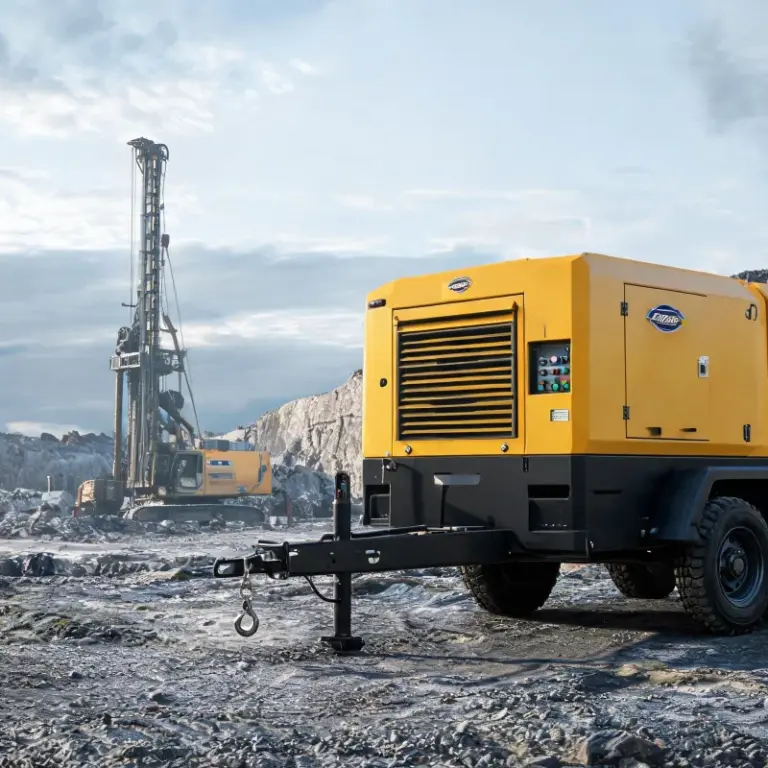
Shaft sinking starts from the surface and digs vertically down, so your compressor sits on a graded surface near the shaft collar. Most projects last 12 to 36 months, so the unit operates 16 to 24 hours a day, six days a week.
Air demand comes from rock drilling tools, mucking equipment, and ventilation backup. The site is exposed to all weather, from sub-zero winter temperatures to extreme summer heat, plus constant silica dust kicked up by drilling.
That’s before you account for access restrictions for heavy equipment.
Key Site Constraints That Impact Performance
First, elevation. A 2021 study from the Global Mining Standards Group confirms that every 1000 meters of elevation above sea level reduces compressor output by roughly 3% due to lower air density. If your shaft starts at 1500 meters, a unit sized for sea level will come up short on pressure.
Second, ambient temperature. Sub-zero temps thicken lubricants and can cause line freezes overnight, while temperatures over 35C increase heat load on the compressor’s cooling system.
Third, silica dust. Unfiltered dust clogs intake filters in 7 to 10 days, not the 30 days most spec sheets claim.
Do you have space to turn a full-size unit around for on-site moves? Most shaft collars have limited laydown area.
Matching Equipment to Site Conditions
Pressure requirement for shaft sinking drilling typically lands between 100 and 150 PSI. Never size your unit for just the peak demand of your tools. Add 15% extra capacity to account for elevation and temperature derating.
The towable frame needs to match your site’s haul road weight limits. If your access road has a 40-ton gross weight limit, don’t spec a unit that hits 42 tons fully fueled.
Intake filtration needs a two-stage heavy-duty design rated for silica-rich environments, per 2023 Mine Safety and Health Administration (MSHA) guidance.
Don’t skip a built-in aftercooler to control outlet air temperature, which prevents moisture buildup in lines that feed drilling tools.
Non-Negotiable Boundary Conditions
A towable unit doesn’t work for every shaft sinking setup. If your project requires moving the compressor down the shaft for lateral drilling after sinking, a towable surface unit is not the right fit.
Don’t buy a unit that doesn’t meet MSHA or IECEx explosion protection standards for gaseous mine environments. Even if your site is classified as non-gassy, most regional regulators require this certification for new equipment purchases.
What if your project duration is less than six months? This framework doesn’t apply, and that scenario is rare for full shaft sinking projects.
Pre-Deployment Site Check Before Acceptance
Once you have the unit on site, run three checks before you connect it to your drilling tools.
First, run a full load test for 4 hours at peak demand, measure output pressure at the farthest point of your air line to confirm it meets your requirement.
Second, check filtration access. Can your maintenance team swap out the intake filter in under 30 minutes without special tools? If not, you’ll lose productive time during changeouts.
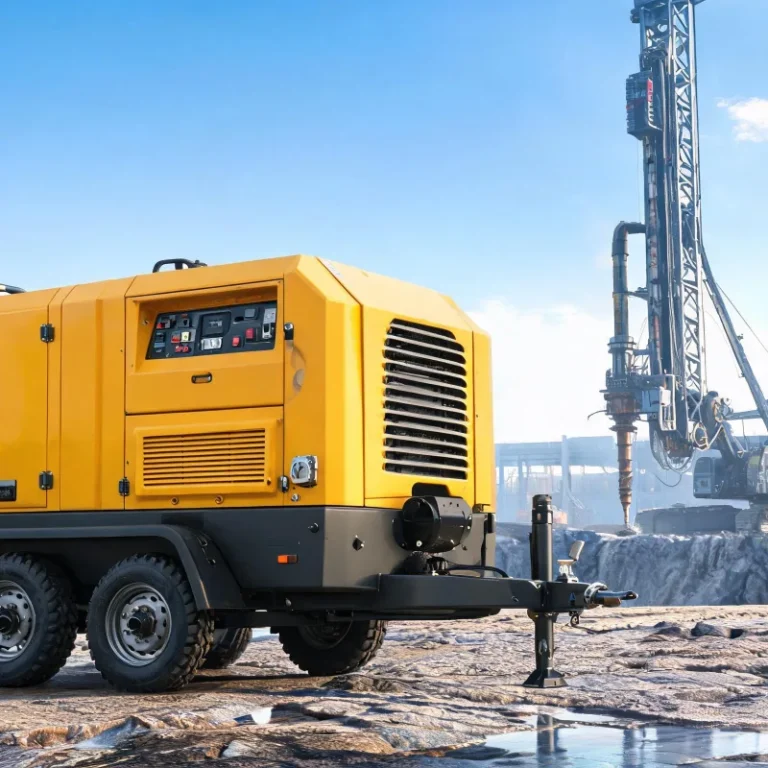
Third, confirm the tow hitch and brake system meets local road safety standards for any on-site moves between shaft locations.
I’ve seen a project delayed two weeks because they skipped the load test and found the unit was undersized for elevation. That’s a mistake you can avoid.
Use Cases
- Surface operation at the shaft collar during vertical sinking
- Supplementary air supply for ventilation systems during construction
- Backup air for emergency egress systems on active shaft projects
- Temporary air supply for multiple shaft locations on a single mining lease
Pitfalls to Avoid
- Sizing the unit only for peak tool demand without derating for elevation
- Using standard single-stage filtration in silica-rich mining environments
- Skipping full load testing before connecting to production drilling equipment
- Buying uncertified units that don’t meet regional mine safety regulations
Implementation Timeline
- Week 1: Offload and position unit at graded shaft collar laydown area
- Week 1: Connect air lines and test all safety shutdown systems
- Week 2: Run 4-hour full load performance test and adjust capacity as needed
- Week 2: Train maintenance team on filter change and daily inspection routines
- Ongoing: Weekly filter inspection, monthly pressure calibration checks
Compliance Notes
- All units must meet MSHA or IECEx explosion protection standards per 2023 regulatory updates
- Weight ratings for towable frames must match local road transport regulations
- Filtration systems must meet regional silica exposure occupational health limits
- Electrical systems must be rated for outdoor operation in extreme temperature ranges
Expert Insights
Site-specific sizing cuts unplanned downtime by 30% for shaft sinking projects
— Jim Hale, Senior Mining Application Engineer
Further Reading
- Selecting a Newly Upgraded Towable Air Compressor for Mineral Exploration Drilling Projects
- Compact Lightweight Diesel Mobile Air Compressor for Small Engineering Teams
- How Much Does a Quality Diesel Portable Air Compressor Cost: Customer Case Breakdown
- Diesel Portable Air Compressor for Construction Jackhammer On-Site Operation
- Two Stage Compression Diesel Mobile Air Compressor for Deep Well Drilling
- Towable vs Wheeled Diesel Portable Air Compressors for Construction Job Sites
- Silent Box Type Diesel Mobile Air Compressor for Urban Municipal Construction
- Cold Resistant Diesel Portable Air Compressor for High Altitude Mountain Operations
About the Author

Frequently Asked Questions
What pressure rating do I need for shaft sinking drilling?
Most projects require 100 to 150 PSI. Add 15% extra capacity to account for site elevation and temperature derating.
Do I need special filtration for mine sites?
Yes. A two-stage heavy-duty filtration system is required to handle silica dust, per 2023 MSHA guidance, to prevent premature clogging.
Can a towable air unit be moved underground after shaft sinking?
No. Standard towable units are designed for surface use at the shaft collar, not for underground transport or operation.
What output adjustment do I need for high elevation sites?
Expect a 3% output reduction per 1000 meters of elevation above sea level, per 2021 Global Mining Standards Group data. Size your unit accordingly.
Do I need explosion-proof certification for mine projects?
Most regional regulators require MSHA or IECEx explosion protection certification for all equipment on mine sites, regardless of gas classification.