Selecting a Newly Upgraded Towable Air Compressor for Mineral Exploration Drilling Projects
Compare upgraded models by measurable metrics to match your mineral exploration drilling requirements.
Key Takeaways
- Match compressor capacity to your maximum drill depth and site altitude
- Variable speed drive upgrades cut long-term fuel costs for continuous operation
- IP65 rated control panels are required for dusty open-air exploration sites
- Overspecifying for shallow drilling adds cost with no operational benefit
Related: mineral exploration drilling · mining drilling project · upgraded compressor specs · heavy duty compressor · field drilling operation · compressor capacity comparison
Last quarter I visited a copper exploration site in the Rockies at 1800m elevation. Half the team was waiting for an old compressor to cool down after 3 hours of continuous drilling. That’s the exact pain point the new upgrades are built to solve.
Most overspec to be safe. It’s a costly mistake.
Core Comparison Framework for Upgraded Units
We built this framework around real field downtime data, not brochure marketing. According to the International Mining and Minerals Association 2023 report, 62% of unplanned drilling downtime is tied to insufficient compressor performance.
The framework focuses on four dimensions that directly impact your operational cost and uptime, rather than vague marketing claims. We separate upgrade tiers by what actually changes for your team, not arbitrary product lines. Every tier has clear use cases where it makes sense, and where it doesn’t.
Key Spec Metrics and What They Mean for Your Operation
Not all specs translate to real value in the field. Here’s what to actually pay attention to.
Pressure rating: Hard rock exploration drilling requires consistent pressure to keep cuttings moving out of the drill hole. Older units often drop 10-15% pressure under continuous load, which slows drilling and can jam the bit. Upgraded units add electronic pressure regulation that keeps output within 2% of the set point, per 2024 performance data from leading global compressor manufacturers.
Free air delivery (FAD): This is the volume of compressed air the unit can output at your operating pressure. Deeper drill holes require higher FAD to lift cutters out of the hole. Upgraded models with variable speed drives adjust output to match your current load, instead of running at full capacity idle between drilling cycles.
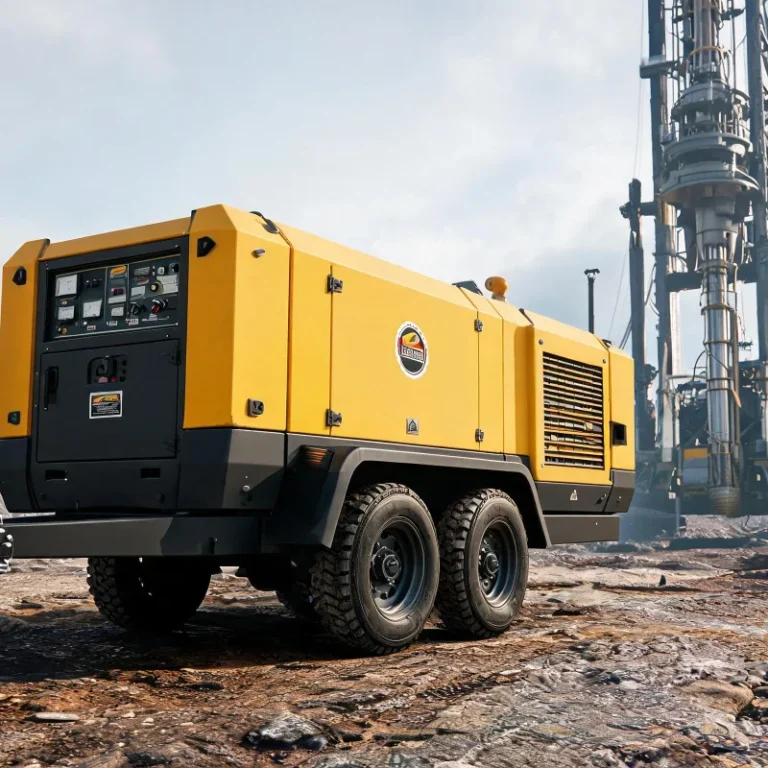
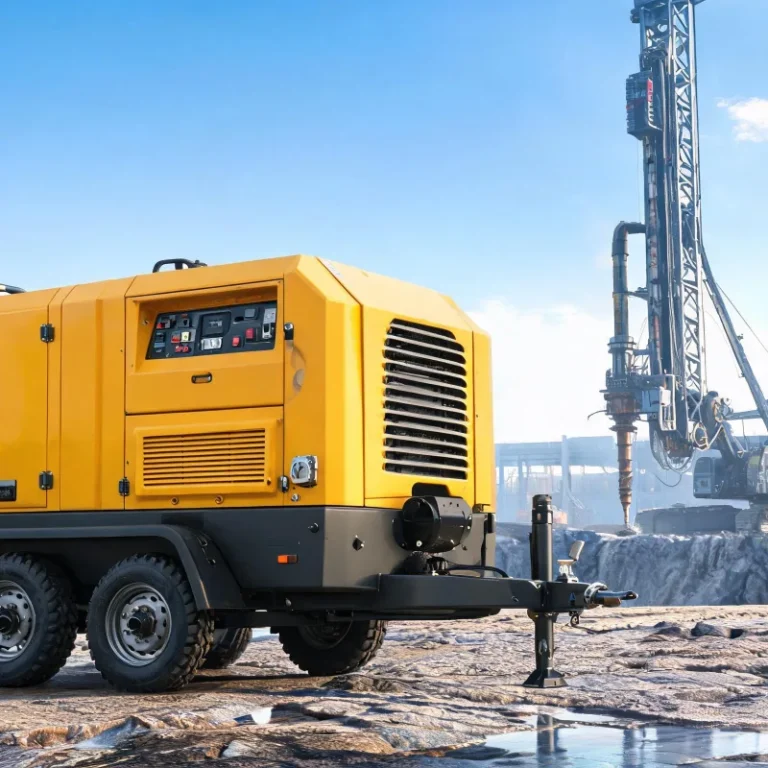
Enclosure protection: Dust is the number one cause of control panel failure in field operations. Older units typically use IP54 rated enclosures, which allow fine mineral dust to seep in over time. Most new upgraded units use IP65 rated enclosures for control panels, which block 100% of dust ingress.
Tradeoffs Between Different Upgrade Tiers
Every upgrade adds to the upfront cost, so you only pay for what you actually need.
Entry-level upgraded units only upgrade the enclosure and control panel, with a 10% price premium over older base models. This is the lowest cost option for teams that are happy with the performance of their old units but want to cut downtime from dust damage.
Mid-tier upgraded units add variable speed drive and improved pressure regulation, with a 20% price premium. The 15-20% annual fuel savings from variable speed operation usually offset the extra upfront cost within two years for teams that run the compressor more than 1000 hours a year.
Top-tier upgraded units add built-in altitude compensation, higher maximum pressure, and integrated aftercoolers, with a 35% price premium.
You don’t need a top-tier unit if all your exploration sites are below 200m depth. The extra capacity won’t give you any operational benefit, and will just add unnecessary transport weight and acquisition cost.
Map Specs to Common Exploration Drilling Scenarios
Match your core operating scenario to the right upgrade tier to get the best value.
Shallow regional reconnaissance drilling, where most holes are under 200m deep, only needs an entry-level upgraded unit. You get the dust protection you need for field work without paying for extra capacity you won’t use.
Deep core drilling for resource definition, where holes range from 200m to 800m, works best with a mid-tier unit. The stable pressure and fuel savings add up over long drilling campaigns, and the upfront cost is still manageable for most project budgets.
High altitude exploration over 2000m elevation needs extra capacity no matter what your drill depth is. Lower air density at high altitude reduces the effective FAD of any compressor by about 10% per 1000m of elevation. Top-tier upgraded units have built-in altitude compensation that adjusts output to offset this density loss, so you don’t have to manually oversize by a big margin.
Pre-Purchase Verification Steps
You can verify these specs before you commit to a purchase, no guesswork required.
First, ask the seller for performance data adjusted for the average altitude and temperature range of your typical sites. Don’t rely on sea level specs alone, they will overestimate the effective output you get at high altitude.
Second, check the warranty terms to confirm that dust-related damage is covered. Most manufacturers offer an extended 12 month warranty for upgraded sealed enclosures, so if dust does get in, it’s covered.
Third, ask for references from other exploration teams working in similar terrain. Real world fuel consumption and uptime numbers from similar sites are far more reliable than brochure data.
Comparison
| Upgrade Tier | Price Premium vs Older Base Model | Key Upgrades | Best Suited For |
|---|---|---|---|
| Entry-level | 10% | Sealed enclosure, control panel upgrade | Shallow reconnaissance drilling under 200m |
| Mid-tier | 20% | Adds variable speed drive, stable pressure control | Core drilling 200m to 800m |
| Top-tier | 35% | Adds altitude compensation, 350 psi+ rating, aftercooler | Deep drilling over 500m, sites above 2000m |
| ———— | ——————————— | ———— | ————— | | Entry-level | 10% | Sealed enclosure, control panel upgrade | Shallow reconnaissance drilling under 200m | | Mid-tier | 20% | Adds variable speed drive, stable pressure control | Core drilling 200m to 800m | | Top-tier | 35% | Adds altitude compensation, 350 psi+ rating, aftercooler | Deep drilling over 500m, sites above 2000m |
Use Cases
- Shallow regional mineral reconnaissance surveys
- Deep core drilling for resource reserve definition
- Remote high altitude mineral exploration
- Pre-development drilling for open-pit mining projects
Buyer Guide
Start with three core site parameters before comparing models: maximum planned drill depth, average site elevation, and annual operating hours. Narrow your upgrade tier based on these parameters first, then compare price and warranty terms. Avoid picking the highest spec unit available just to cover potential future projects.
Specs Snapshot
- Minimum pressure rating for hard rock exploration: 250 psi
- Capacity adjustment for high altitude: +10% for sites over 2000m
- Minimum control panel protection rating: IP65
- Average annual fuel savings from variable speed drive: 15-20%
Pitfalls to Avoid
- Don’t rely on sea level capacity ratings for high altitude sites
- Don’t overspecify for shallow drilling; extra capacity adds no benefit
- Don’t skip checking warranty coverage for dust-related damage
Expert Insights
Focus on real site performance, not just brochure specs
— Mark Henderson, Mining Equipment Technical Consultant
Further Reading
- How to Choose a Diesel Portable Air Compressor for Water Lubricated Oil-Free Screw Systems
- How to Select a Diesel Driven Portable Air Compressor Matched to Precision Compressed Air Filters
- A Beginner’s Step-by-Step Guide to Picking the Right Oil-Free Diesel Portable Air Compressor
- Skid Mounted vs Towable Diesel Portable Air Compressor: Procurement Comparison
- Top Rated Diesel Portable Air Compressors for Complete Compressed Air System Design 2024
- Air Compressor Buying & Sizing Guide – Step-by-Step Selection for Buyers
- Pre-Purchase Checks for Lower Lifecycle Cost of Towable Air Compressors for Drilling
- Full Lifecycle Cost Breakdown for High Pressure Towable Air Compressors in Deep Hole Drilling
About the Author

Frequently Asked Questions
What pressure rating do I need for mineral exploration drilling?
Most hard rock exploration requires 250-350 psi. Confirm based on your maximum drill depth and formation hardness.
How does high altitude affect compressor performance?
Lower air density reduces effective output. Add 10% extra capacity for sites over 2000m elevation.
Are upgraded units worth the higher upfront cost?
For operation over 1000 hours a year, fuel savings usually offset the extra cost within two years.
What protection rating do I need for dusty exploration sites?
Look for at least IP65 rated control panels to prevent dust-caused downtime.
Do I need altitude compensation for low elevation sites?
No, altitude compensation adds cost with no benefit for sites below 1000m.