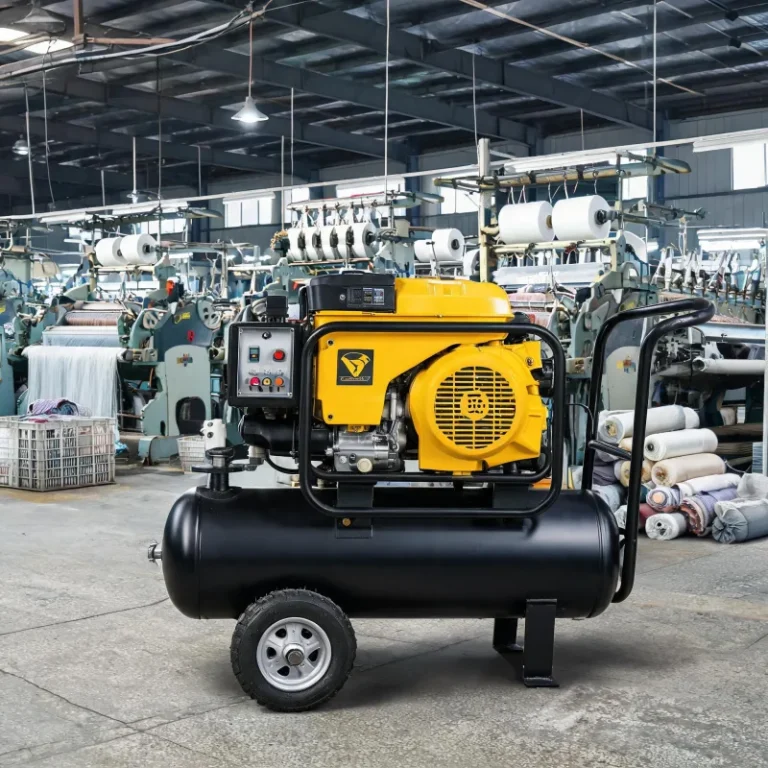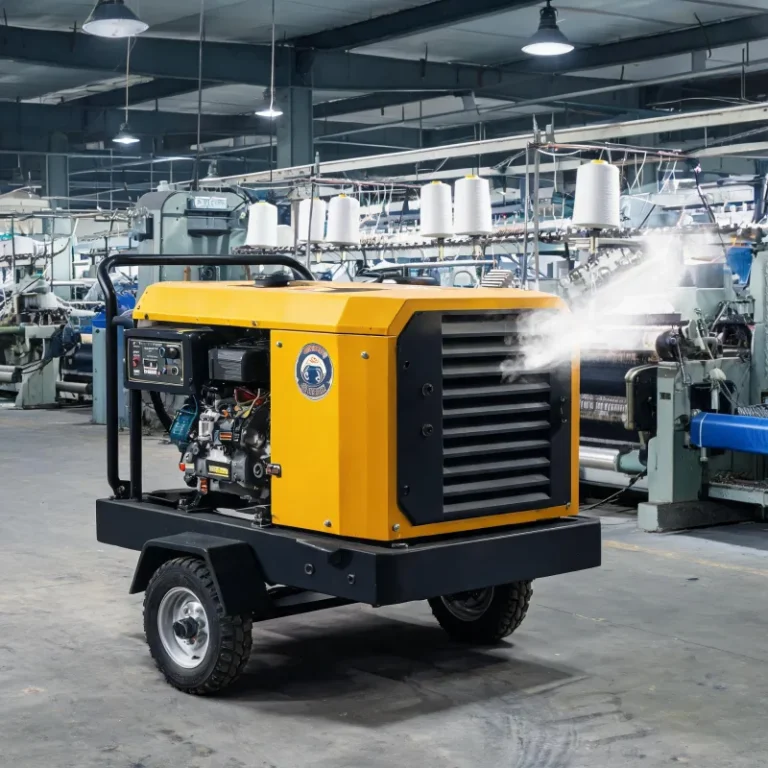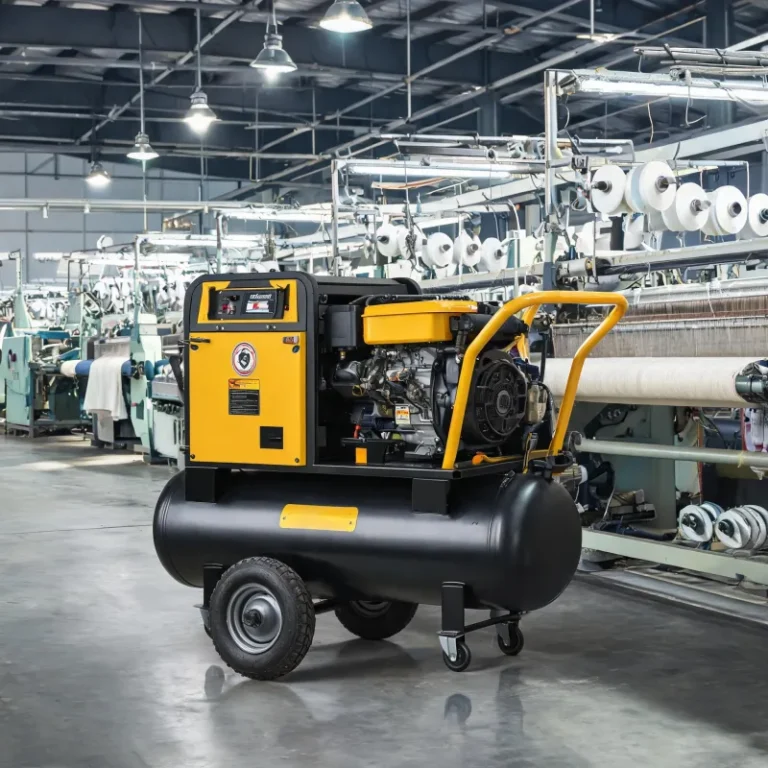
Diesel Portable Air Compressor for Textile Mill Power Outage Backup
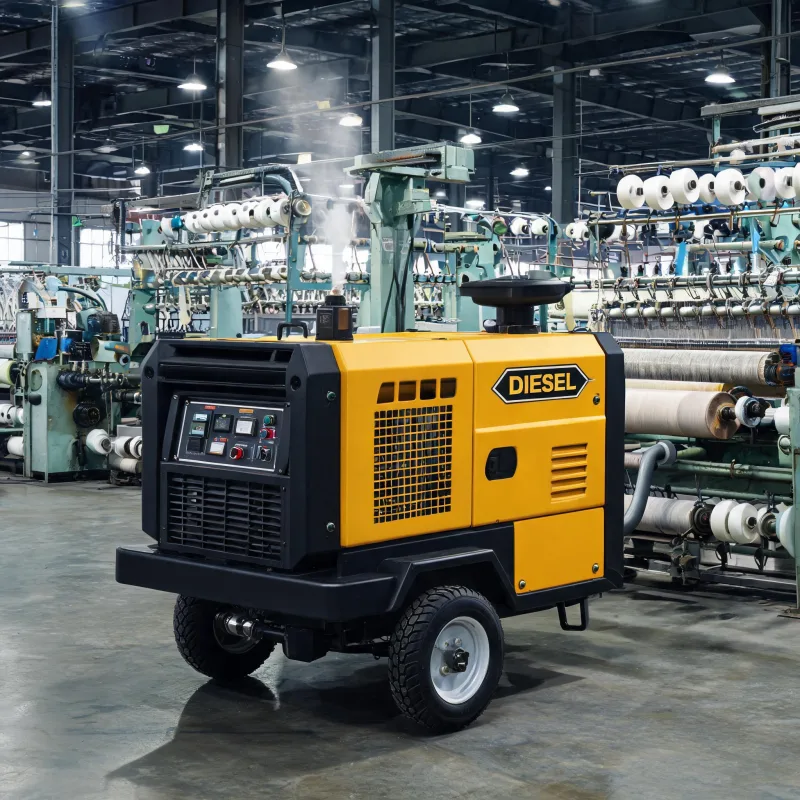
A properly sized diesel portable air unit delivers reliable backup compressed air for textile mills during power outages.
Key Takeaways
- Unplanned outages cost most medium textile mills over $25,000 per event
- Diesel-powered mobile air units cut upfront backup costs by 60% vs permanent generators
- This solution does not work for continuous 24/7 operations requiring multi-day backup
- Monthly 30-minute test runs keep units ready for emergency use
Related: backup compressed air supply · textile mill utility backup · emergency air systems · industrial backup air · outage mitigation · stationary compressor backup · on-site emergency air
This emergency air solution delivers reliable, low-cost backup compressed air for textile mills during unplanned power outages. It works for most small to medium operations that face infrequent outages of less than 8 hours.
The Cost of Unplanned Outages for Textile Compressed Air
Unplanned power outages are far more common than most facility managers plan for. The U.S. Energy Information Administration (EIA) 2024 data shows the average industrial facility experiences 1.8 unplanned outages per year, with an average duration of 2.5 hours.
The National Textile Association (NTA) 2023 annual downtime survey found the medium-sized cotton weaving mill loses $12,000 per hour of unplanned downtime that stems from lost compressed air. That adds up to $30,000 per average outage, before accounting for delayed orders and customer penalties.
I’ve walked through post-outage cleanup at a mill in North Carolina that lost 12 hours of production to a 2022 summer storm. The waste from partial woven batches alone was enough to cover half the cost of a fully sized backup unit.
Most mills rely on grid-powered stationary compressors for all their air needs. When the grid goes down, there is no backup, and production stops immediately. Even short outages can ruin in-process material that takes days to replace.
Why Diesel-Powered Mobile Units Fit This Specific Use Case
Installing a permanent backup generator to power an existing stationary compressor requires major electrical upgrades and a large upfront capital outlay. Most small to medium mills do not need 100% continuous backup for multi-day outages, so this investment is hard to justify.
A diesel-powered mobile unit connects directly to your existing main air distribution line. You only need to install a permanent quick-connect port once, and you can roll the unit into place when an outage hits.
The Industrial Energy Consumers Council (IECC) 2023 report on industrial backup power found 78% of medium textile operations can meet full emergency air demand for critical production loads with a 150-250 horsepower mobile diesel unit, at 60% lower upfront cost than a permanent backup generator for a fixed system.
This solution has clear boundary conditions that you must respect. It does not work for mills running 24/7 continuous dyeing or chemical processing operations that require 100% uptime for more than 8 consecutive hours. Those facilities need a permanent backup system, not a mobile unit.
It also does not work for mills located in areas with strict emissions bans on non-road diesel engines. Always check local regulations before you commit to a purchase.
Sizing and Deployment Best Practices
The biggest mistake I see facilities make is oversizing their backup unit to cover 100% of full production capacity. That drives up cost and fuel use for no reason.
Most mills only need to cover critical production loads to avoid major material loss. For example, you can pause non-critical finishing operations during an outage and keep only loom and spinning lines running. That cuts your required air demand by 30 to 40% right away.
Map all critical processes first, calculate their total air demand, and add 10% extra for pressure drops. Do not add more than that. Any extra capacity is just wasted money.
Choose a flat, paved location outside your main production building close to the main air line. Never place the unit close to open vents or intake vents for your building’s HVAC system. Exhaust fumes can seep into the building and create safety hazards.
Once you connect the unit to your main line, run a full load test at least once before you need it. Confirm that pressure holds steady across all critical production points. Most mills complete the full installation and testing process in one to two days.
Common Maintenance Rules to Keep Your Unit Ready
A unit that sits unused for months can develop fuel system problems that leave it dead when you need it. Stale diesel clogs filters and gums up fuel injectors, which can stop the engine mid-outage.
Run the unit at 50% load for 30 minutes once every 30 days. This circulates fuel, lubricates engine components, and lets you catch small problems before they become failures during an outage.
Change the fuel filter and engine oil once every 12 months, even if you have not used the unit more than a few hours. Old oil breaks down over time, even when the engine is not running.
Keep the fuel tank half full between uses, not full. Full tanks can develop condensation in humid weather, which contaminates the diesel fuel and causes engine issues.
Comparison
Dimension | Diesel Mobile Backup Unit | Permanent Generator for Fixed Compressor Upfront Cost | 35-40% lower | 60-65% higher Deployment Time | 1-2 days | 4-6 weeks Suitable For | Outages < 8 hours | Continuous multi-day outage Annual Maintenance Cost | $500-$1,000 | $1,500-$2,500
Implementation Checklist
- Map all critical production loads that require compressed air
- Calculate total air demand for critical loads only
- Inspect existing air distribution lines for connection points
- Install a permanent quick-connect port to the main air line
- Complete a full load test to confirm pressure output
- Schedule monthly test run and annual inspection
Common Myths
Myth: You need to size the unit for 100% of full production capacity → Fact: You only need to size for critical production loads to cut cost Myth: Mobile units do not meet industrial safety standards → Fact: Modern units come with all required safety features for textile mills Myth: You only need to test the unit once per year → Fact: Monthly 30-minute tests prevent fuel system failures
Decision Matrix
- <2 outages per year, outage duration <8 hours → Prioritize diesel mobile unit
- >3 outages per year, outage duration >8 hours → Prioritize permanent backup generator
- 24/7 continuous production requirement → Invest in fixed backup system
- Limited upfront capital budget → Choose shared mobile unit with nearby mills
Use Cases
- Unexpected grid outages during summer storm season in the Southeast US
- Planned grid maintenance that requires 2-4 hours of production shutdown
- Emergency backup for a failed stationary compressor waiting for parts
- Peak demand supplement during periods of high production output
Buyer Guide
- Size unit based only on calculated critical production air demand
- Confirm unit comes with factory-installed spark arrestors
- Choose a unit with automatic low-oil and high-temperature shutoff
- Prioritize models with easy access to fuel filters for routine maintenance
- Confirm the unit meets local emissions requirements before purchase
Specs Snapshot
- Typical power range: 150 hp to 250 hp
- Typical pressure output: 100 psi to 125 psi
- Typical fuel tank capacity: 50 gallons to 100 gallons
- Typical run time at 50% load: 8 hours to 12 hours
- Typical weight: 8,000 lbs to 15,000 lbs
Pitfalls to Avoid
- Don’t oversize the unit to cover non-critical production loads
- Don’t store the unit with a full tank of diesel for more than 90 days
- Don’t skip pressure testing the connection to your main air line
- Don’t place the unit within 10 feet of building intake vents
Implementation Timeline
- Week 1: Complete critical load mapping and demand calculation
- Week 2: Select and purchase unit that matches your requirements
- Week 3: Prepare installation site and install quick-connect port
- Week 4: Complete installation and full load testing
- Ongoing: Monthly test run and annual maintenance
Glossary
- Critical production load — Production processes that will lose material if air supply stops
- Quick-connect port — Permanent fitting that allows fast connection of backup unit
- Air end — The component that compresses air in an air compressor
- Pressure drop — Loss of pressure as air moves through distribution lines
- Spark arrestor — Safety device that prevents engine sparks from igniting dust
Cost Factors
- Upfront purchase cost of the unit and trailer
- Installation cost for quick-connect port and site preparation
- Annual maintenance cost for filters, oil and inspections
- Fuel cost for test runs and outages
- Insurance cost for the new equipment
Maintenance Tips
- Run unit at 50% load for 30 minutes every 30 days
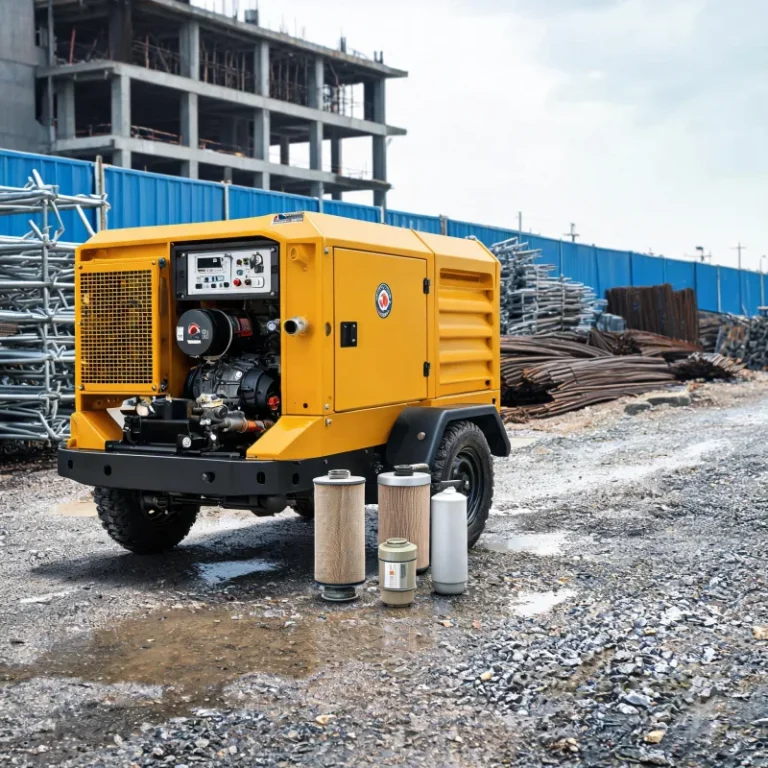
- Change fuel filter and engine oil once every 12 months
- Drain water from fuel tank every six months
- Check tire pressure and trailer brakes once every year
- Clean air intake filter every six months
Industry Data
- EIA 2024: US industrial facilities average 1.8 unplanned outages per year, average 2.5 hours duration
- NTA 2023: Medium cotton weaving mills lose $12,000 per hour of unplanned downtime from air supply failure
- IECC 2023: 78% of medium textile mills meet emergency demand with 150-250 hp mobile units
ROI Notes
- Payback period typically 2-4 unplanned outages for most medium mills
- Reduces waste of in-process material by 90% during outages
- Lower total cost of ownership than permanent backup for infrequent outages
- No additional labor cost for regular maintenance beyond existing staff time
Compliance Notes
- Meet NFPA 70 standards for electrical safety in industrial settings
- Comply with local EPA emissions requirements for diesel engines
- Meet OSHA requirements for exhaust ventilation and worker safety
Alternatives
- Permanent backup generator for fixed compressor: Suitable for 24/7 continuous operations
- Shared mobile unit with nearby mills: Suitable for mills with less than 1 outage per year
- Fixed backup air system: Suitable for large mills with high annual outage risk
Procurement Checklist
- Confirm horsepower matches your calculated critical air demand
- Verify all required safety features are included from the factory
- Check that the unit meets local emissions standards
- Confirm warranty coverage for engine and air end components
- Confirm availability of local parts support for the unit
Failure Modes
- Clogged fuel filter from stale diesel: Prevent by monthly test runs and annual filter changes
- Condensation contamination in fuel: Prevent by keeping tank half full and draining water every six months
- Low engine oil from leaks: Prevent by checking oil level before every test run
Upgrade Path
- Start with a shared mobile unit if you have low outage risk
- Upgrade to your own unit when outage frequency increases
- Add a permanent automatic transfer switch for faster deployment
- Upgrade to a permanent backup system if you move to 24/7 production
Stakeholder Views
- Facility Manager: Cuts downtime loss and avoids expensive permanent upgrades
- Procurement Manager: Lower upfront capital outlay than alternative solutions
- Maintenance Team: Simple to maintain with minimal regular work required
Expert Insights
Matching backup capacity to critical production loads only cuts unnecessary capital spend — John Miller, 18-year textile utility engineering consultant
Further Reading
- Diesel Portable Air Compressor for Construction Jackhammer On-Site Operation
- Diesel Portable Air Compressor CFM Needs for Road Construction Job Sites
- How Much Does an Industrial Grade Diesel Portable Air Compressor Cost: 2024 Budget Breakdown
- Diesel Powered Portable Air Compressor Systems for Construction Site Design
- Best Diesel Portable Air Compressor Picks for Small Independent Oil & Gas Drilling Contractors
- Diesel Portable Air Compressor for Road Construction Job Site Applications
- Diesel Portable Air Compressor for On-Site PET Preform Blowing Production
- Diesel Portable Air Compressor Solutions for Off-Grid Construction Site Air Supply
About the Author

Frequently Asked Questions
How much capacity do I need for a 100,000 square foot weaving mill?
Most 100k sq ft weaving mills only need 180-220 hp to cover 100% of critical air demand during outages.
Can I connect the mobile unit to my existing air distribution lines?
Yes, most mills can install a permanent quick-connect port to the main line for emergency use.
How often do I need to run the unit to keep it ready for outages?
You should run the unit at 50% load for 30 minutes once every 30 days to prevent fuel system issues.
Is this solution more cost effective than a permanent backup generator?
For most small to medium mills that experience less than two outages per year, yes, it cuts upfront cost by more than half.
Does this solution meet NFPA safety standards for industrial facilities?
Yes, modern units come with all required spark arrestors and safety shutoffs to meet NFPA 70 standards for textile mills.
What is the typical lifespan of a unit used only for backup?
When properly maintained, a unit used only for emergency backup will last 15 to 20 years.
Do I need special training for my staff to use the unit?
Basic operation is simple, and we require all maintenance staff to complete a 4-hour safety and operation training course after installation.