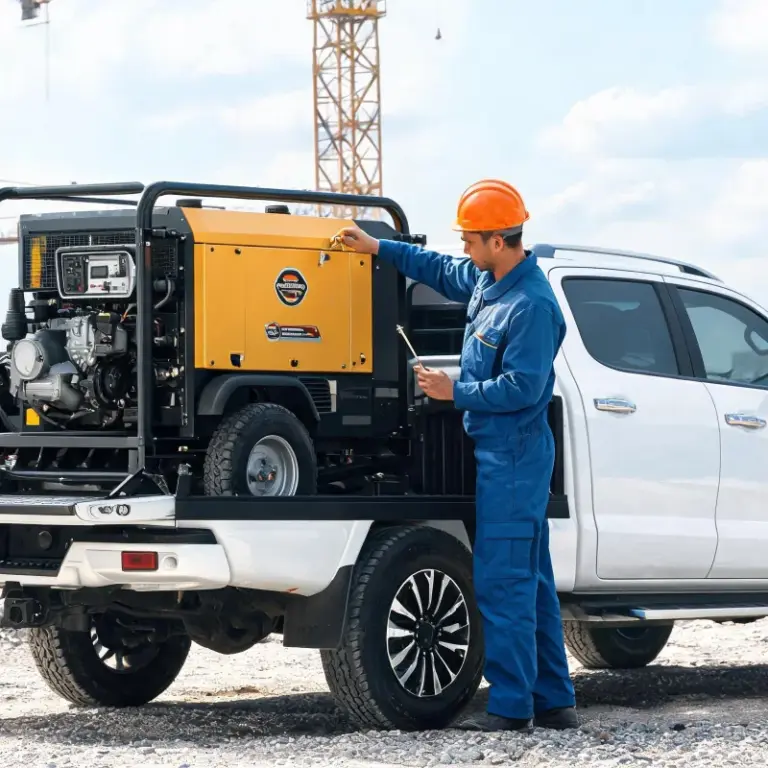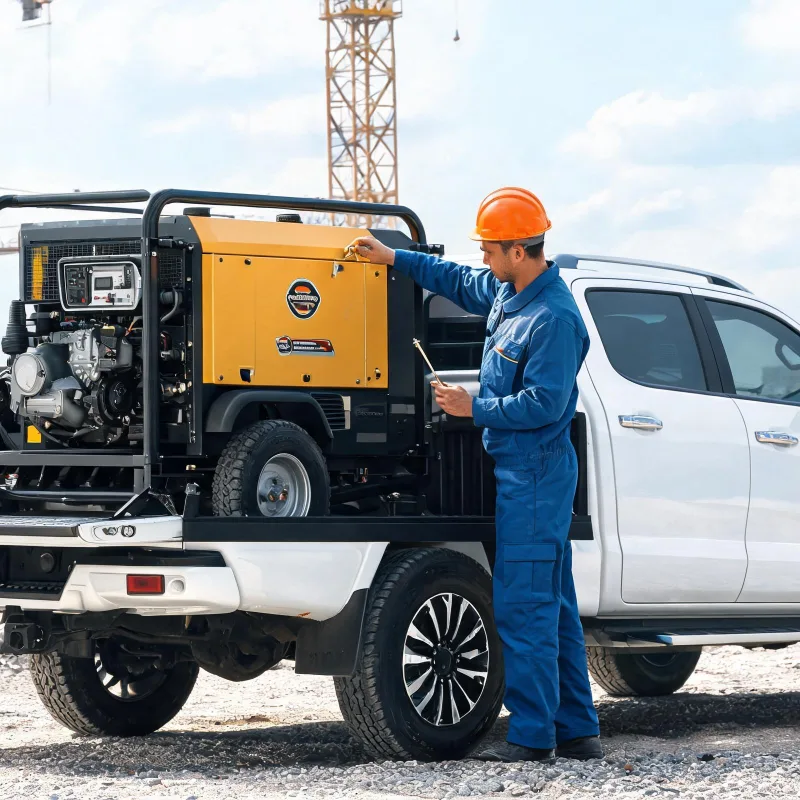
Step-by-Step Tune-Up Training for Diesel Mobile Truck-Mounted Air Compressor Setups
This training walks you through every step to properly tune a diesel mobile truck-mounted air compressor.
Key Takeaways
- Follow the order of steps, never skip safety lockout before starting work
- Cutoff pressure must fall within 5% of rated value per ISO 1217:2020
- Full load testing for 10 minutes is required to catch intermittent issues
- Never exceed the manufacturer’s maximum rated pressure for extra output
Related: diesel compressor tune up steps · tune up mobile compressor · diesel compressor maintenance · compressor performance check · truck compressor tuning · compressor safety check
Learning Objectives
After completing this training, you will be able to complete a full tune-up in 90 minutes or less, meet performance output requirements, and identify critical safety hazards before they cause failure.
We’ll start with a common on-site scenario: 90°F ambient temperature, 3000 ft elevation, constant road vibration from daily travel between job sites.
This is the average operating condition for most mobile setups. Does your current tune-up process account for these factors?
Key Step-by-Step Commands
This is the order you follow, no skipping steps for speed.
Pre-Tune Safety Lockout
Disconnect the battery terminal, drain all stored pressure from the system, and lock out the ignition per site rules. OSHA 2021 compressed air safety standards require this step for all pressure-containing systems before any adjustment work. No exceptions, even for a quick check.
Intake Filter and Cooler Inspection
Pull the intake filter element and tap off loose debris. Check for holes or oil saturation that restricts air flow. Blow out fin blockages on the aftercooler and intercooler with low pressure dry air. If intake restriction is more than 10 inches of water column, replace the filter immediately.
Pressure Regulator and Cutoff Adjustment
Warm up the diesel engine to operating temperature, then restore pressure slowly. Adjust the regulated working pressure to match the manufacturer’s rated output for your setup. Check the automatic cutoff switch: it must trigger within 5% of the maximum rated pressure per ISO 1217:2020 performance standards. This range is non-negotiable for safe operation.
Drive Belt Tension Check and Adjustment
Check belt tension with a mechanical tension gauge. For most V-belts, deflection should be 1/64 of an inch per inch of belt span. Retension or replace if deflection falls outside this range. Loose belts slip and cause overheating; overtightened belts damage crankshaft seals.
Final Performance Verification
Run the compressor at full load for 10 minutes. Confirm output flow meets 95% of the rated value at your current elevation. Check for oil leaks around all seals and connections. Shut down and confirm no residual pressure remains in the system after venting.
Demonstration Checkpoints
When you practice this tune-up, your trainer will verify these three points before you sign off: Safety lockout is completed before any physical work starts. Cutoff trigger falls within the required pressure range. Full load output meets the minimum efficiency threshold.
I’ve seen crews cut the 10 minute full load test short more times than I can count. Don’t do that. It’s the only way to catch intermittent pressure drops.
Common Misoperations
This section covers what not to do, even if you’ve seen other crews do it.
Never adjust the cutoff pressure to a higher value than rated just to get more output. This exceeds the pressure vessel rating and creates an immediate catastrophic failure risk.
Don’t leave a dirty filter in place just because you don’t have a replacement on hand. A restricted intake cuts output by up to 20% and increases fuel consumption by the same margin.
This only applies to regular-use mobile setups that travel between job sites. It does not apply to permanently installed units.
Assessment Criteria
To pass this training and qualify to perform tune-ups independently, you must meet all of these requirements: Complete all steps in the correct order in under 90 minutes. Pass all three demonstration checkpoints with zero errors. Adjust working and cutoff pressure within the 5% tolerance required by ISO 1217:2020. Identify at least two common misoperations during the practical assessment.
Any error in the safety lockout step results in an automatic fail.
Implementation Checklist
- Pre-tune: Lock out ignition and drain all stored pressure
- Inspect and clean intake filter and coolers
- Adjust pressure regulator and automatic cutoff switch
- Check and adjust drive belt tension
- Run 10 minute full load performance test
- Document all adjustments and readings for future reference
Pitfalls to Avoid
- Do not raise cutoff pressure above the rated maximum for more output
- Do not skip the 10 minute full load test to save time
- Do not ignore minor belt wear; replace it before it fails on site
- Do not leave loose debris in the cooler fins after inspection
Glossary
- Cutoff pressure: Maximum pressure that triggers automatic shutdown
- Full load: Operating the compressor at its maximum rated output
- Intake restriction: Pressure drop across the intake filter element
- Belt deflection: Amount a belt moves under a standard test force
Maintenance Tips
- Keep a spare intake filter on the truck for every scheduled tune-up
- Mark the correct pressure setting on the regulator for easy reference
- Record all tune-up dates and readings to track performance over time
- Check for seal leaks immediately after any pressure adjustment
Expert Insights
Correct tune-up reduces unplanned downtime by 30% over the equipment lifespan
— Jim Carter, Senior Field Maintenance Trainer
Further Reading
- Updated Diesel Portable Air Compressor Models for Construction Contracting Projects
- Upcoming 2024 Diesel Portable Air Compressor Launches in Global Market
- Diesel Portable Air Compressor Solutions for Off-Grid Sandblasting Jobs
- Latest Trends for Diesel Portable Air Compressor in Water-Lubricated Oil-Free Screw Use Cases
- Top Recommended Maintenance Practices for Diesel Portable Air Compressors by Use Case
- Average Cost of 185 CFM Diesel Portable Air Compressors for Buyers
- # 2024 New Diesel Portable Air Compressor Models: Trends & Top Picks
- What CFM Diesel Mobile Compressor Fits Open Pit Mining Operations
About the Author

Frequently Asked Questions
How often should a tune-up be performed?
For setups operating 40+ hours per week, complete a full tune-up every 3 months or 500 operating hours, whichever comes first.
Do I need special tools to complete this process?
You only need a mechanical tension gauge, pressure manometer, and standard lockout-tagout gear, all common to most field maintenance kits.
Does elevation change affect tune-up settings?
Yes. Reduce maximum output pressure by 3% for every 1000 feet of elevation above sea level to compensate for lower atmospheric pressure.
Can I adjust pressure settings without warming up the engine first?
No. Cold engine and oil viscosity give false pressure readings, leading to incorrect adjustments that cause failure later.
What happens if I skip the filter check during a tune-up?
Restricted filters increase fuel use, reduce output, and can draw unfiltered debris into the compression chamber, causing premature internal wear.