Buyer’s Brief: Selecting the Right High Output Diesel Portable Unit for Heavy Agricultural Work
Match your heavy agricultural work requirements before committing to a purchase.
Key Takeaways
- Confirm your required CFM output at working pressure before comparing options
- Factor in hidden costs like registration, maintenance and spare parts lead time
- Add a performance guarantee clause to your purchase contract
- Verify emission certification matches your regional regulatory requirements
Related: heavy agricultural air work · high output air supply · field deployed air power · remote farm power needs · heavy duty air flow · towable air unit
Core Decision Problem for Farm Buyers
You need consistent high air flow for hours of continuous heavy work, spread across multiple unconnected field sites. Bringing in third party power drops for every job is not feasible for most mid to large size farm operations. Smaller units can’t handle peak demand when running multiple air-powered tools at once.
I’ve seen three farms burn out under-sized units in one planting season alone.
You don’t just need air flow. You need it available wherever you need it, without relying on fixed infrastructure. That’s the core tradeoff here.
Non-Negotiable Performance Constraints
Required Output for Heavy Loads
The American Society of Agricultural and Biological Engineers (ASABE) published updated load guidelines for field deployed air equipment in 2022. For continuous operation of air-powered post hole diggers, hydraulic breakers, and harvester air systems, you need a minimum 185 CFM output at 100 PSI for most general heavy work. Large scale irrigation pipe installation or deep tillage requires 300 CFM or higher.
Any unit that does not hit your required CFM at your intended working pressure is not worth considering.
Mobility and Durability Constraints
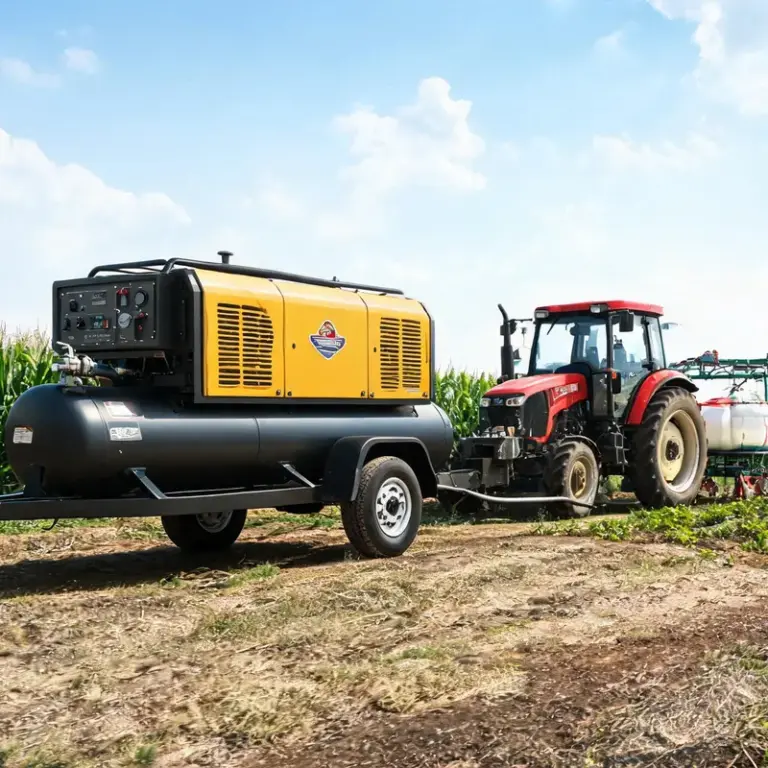
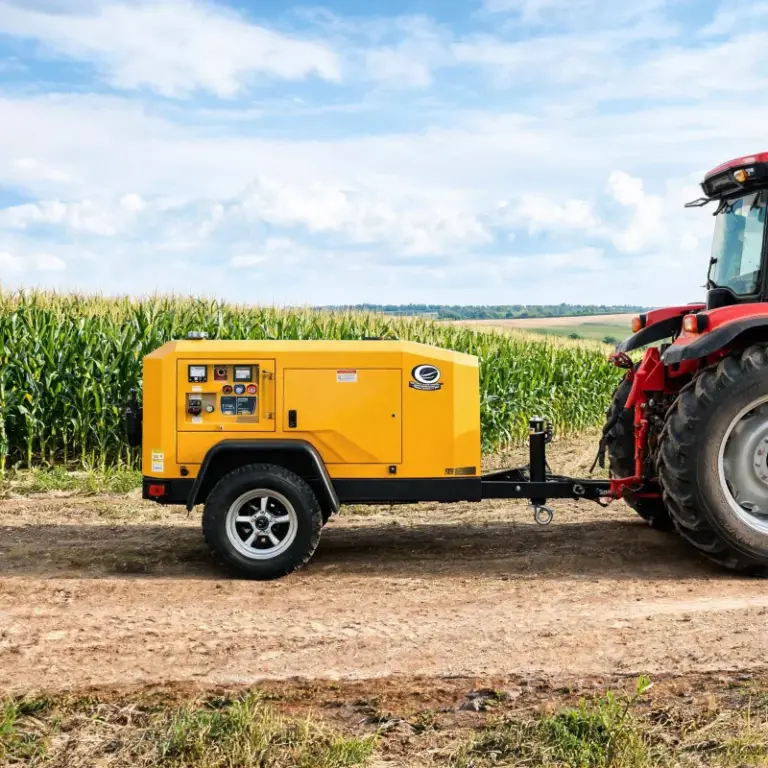
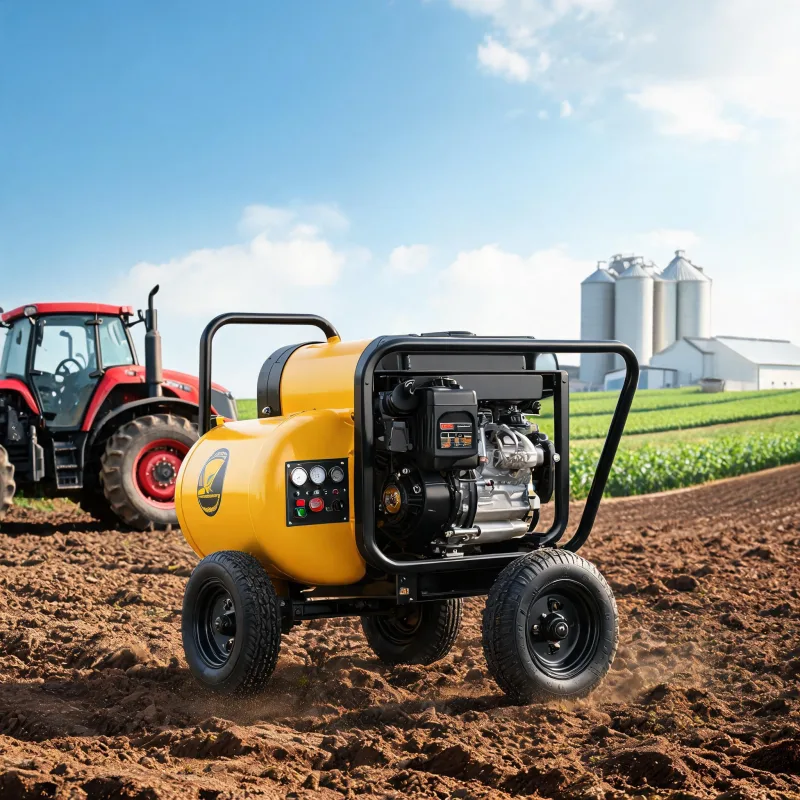
Portable for agricultural work means it can be towed behind a standard farm pickup or utility tractor, with secure mounting for rough unpaved field roads. It needs fully enclosed components to protect against dust, crop debris, and unexpected rain. No exposed wiring or valve controls that can get clogged with dirt.
This is non-negotiable for outdoor field use.
When This Unit Is Not A Good Fit
If all your air demand is centered at a single fixed barn or processing facility, a stationary electric unit will almost always have lower long term operating cost. If you only run small hand tools for less than 10 hours a month, you do not need a high CFM diesel unit.
Skip this category and save your budget for other operational needs.
Key Comparison Dimensions for Shortlisted Units
Don’t just compare sticker price. Compare how the unit performs under the conditions you actually work.
First, check cold weather starting capability if you operate in northern climates. The U.S. Department of Energy 2023 efficiency standards for non-road diesel engines require minimum starting performance at 20°F, but many premium units offer cold start kits for temperatures down to 0°F.
Check the engine certification to confirm it meets current non-road emission standards for your region. Running an uncertified unit can lead to fines in most regulated areas.
Next, check tank size. A full fuel tank should run your unit at full load for a minimum of 8 hours without refueling.
There’s nothing worse than stopping mid-job to refill fuel when you’re on a deadline. That’s a common oversight.
Hidden Costs Outside the Sticker Price
Most buyers only look at the upfront purchase cost. There are three common extra costs you need to account for before finalizing your budget.
First, delivery and registration for road towing. Many suppliers quote a base price that does not include towing hitch upgrades or state road registration for towed equipment.
Second, mandatory engine maintenance schedules. High load continuous operation requires more frequent oil and filter changes than light use. Confirm the required maintenance interval and factor in parts and labor cost for a full year of operation.
Third, spare parts lead time. If your unit breaks down during planting or harvest season, a 4 week lead time for a critical part can cost you far more than the part itself.
Hidden costs can add 15% or more to your total five year ownership cost.
Contract and Acceptance Check Points
Before you sign the purchase agreement, walk through these clauses to avoid disputes later.
First, confirm the CFM output guarantee. The contract should explicitly state the minimum CFM output at your working pressure, not just peak output at idle. If the unit fails to meet this output on delivery, you should have the right to return it for a full refund, no restocking fee.
Second, confirm the warranty coverage for the engine and the air end. Most standard warranties cover one year, but many suppliers offer extended coverage for agricultural use that is worth the extra cost.
Third, confirm the delivery lead time against your work schedule. If you need the unit for planting season, a 12 week delay that pushes delivery past your window should allow you to cancel the order without penalty.
I’ve had clients lose thousands in delayed planting because they didn’t add this simple clause.
Decision Guide
| Requirement | Pass Threshold | Fail Threshold |
|---|---|---|
| CFM at 100 PSI | Meets or exceeds site demand | Below required site demand |
| Full load run time | 8 hours or more | Less than 8 hours |
| Emission certification | Meets regional rules | Does not meet regional rules |
| Cold start capability | Works at your lowest winter temp | Fails to start at your lowest temp |
|————-|—————-|—————-| | CFM at 100 PSI | Meets or exceeds site demand | Below required site demand | | Full load run time | 8 hours or more | Less than 8 hours | | Emission certification | Meets regional rules | Does not meet regional rules | | Cold start capability | Works at your lowest winter temp | Fails to start at your lowest temp |
Buyer Guide
Start by calculating the total CFM demand of all tools you will run simultaneously. Add 10% extra capacity for unplanned peak load demand. Narrow down units that meet or exceed this output at your working pressure. Next verify mobility and emission requirements, then compare total ownership cost instead of just upfront price.
Cost Factors
- Upfront purchase price: 70-80% of first year total cost
- Delivery and road registration: 5-10% of upfront cost
- Annual maintenance: 3-7% of upfront cost per year
- Downtime cost: Variable, can exceed 10% of annual operating budget during critical work seasons
Expert Insights
Always prioritize verified CFM output over sticker price for heavy continuous field work | Jim Carter, Farm Equipment Procurement Consultant
Further Reading
- Selecting the Right Diesel Portable Air Compressor for Off-Grid Sandblasting
- Full Performance Review: 185 CFM Diesel Portable Air Compressor for Construction
- High Pressure Diesel Portable Permanent Magnet VFD Compressor for Jackhammer Work
- What Price Range Can You Expect For A 300 CFM Diesel Portable Air Compressor For Sale
- Diesel Portable Air Compressor Powering Jackhammers for Road Construction
- 2024 Updated Steps to Check Pressure & CFM Ratings for Diesel Portable Air Compressor
- Small vs Large Diesel Portable Air Compressor for Residential Projects
- Diesel Portable Air Compressor: A Guide for Small Construction Business Owners
About the Editorial Team
Frequently Asked Questions
What CFM rating do I need for heavy agricultural work?
For most heavy tasks like post hole digging or irrigation installation, you need at least 185 CFM at 100 PSI. Deep tillage or multiple tool operation requires 300 CFM or higher.
Do I need a towable unit for scattered field sites?
Yes, if you work across multiple unconnected fields, a towable portable unit eliminates the need for expensive fixed power infrastructure at every site.
What emission standards do I need to comply with?
All non-road diesel units sold in North America and the EU must meet current regional emission standards. Confirm certification before purchase to avoid fines.
How do I verify a unit’s CFM output before accepting delivery?
Ask the supplier to conduct a load test on delivery per ASABE 2022 test methods. Get the results in writing before signing off on acceptance.
What fuel run time should I expect for full load operation?
A properly sized fuel tank should deliver at least 8 hours of continuous full load operation without refueling.