Common Mistakes When Selecting a Tow Behind Compressor for Large-Scale Agriculture
Ignore generic sizing myths, match output to your farm’s actual load to get the right unit.
Key Takeaways
- Oversizing towed air units adds 30-40% unnecessary cost for most large farms.
- Sizing should be based on continuous output, not marketed peak output.
- Add 10% load redundancy instead of 30%+ for most dispersed large farming operations.
- Stationary units are a better fit for all fixed-location air demand on farm.
Related: select farm air compressor · large farm air power · mobile air for agriculture · trailed air compressor · farm equipment air supply · agricultural power supply
Bigger Output Always Equals Better Performance
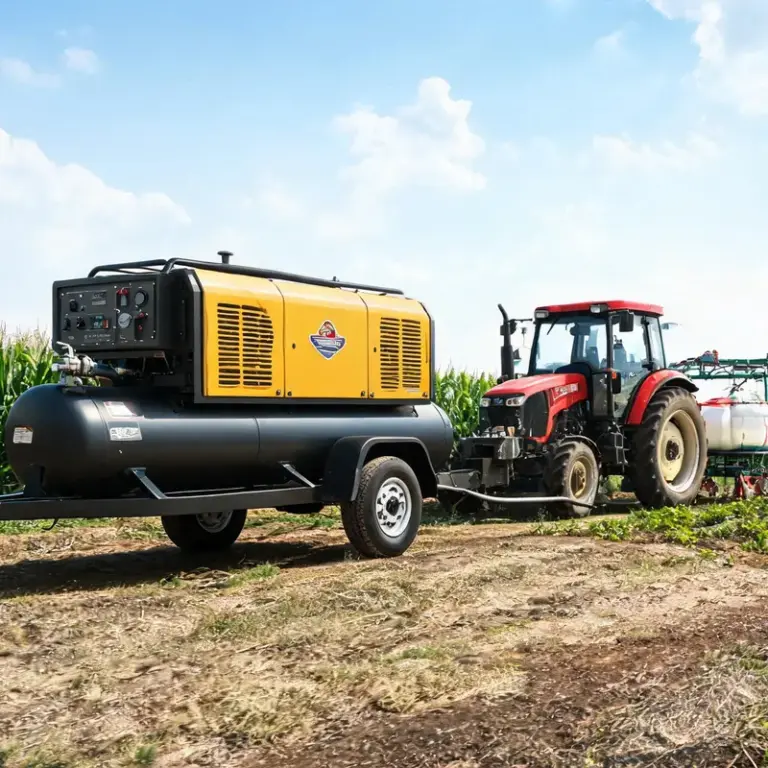
This is the most common claim you will see when browsing equipment options. The logic sounds simple: extra capacity never hurts, so go big to avoid being caught short. We have seen this play out on 1,000+ acre corn operations in the U.S. Midwest, where teams bought units 30% larger than needed and paid 40% more upfront.
Why This Common Advice Fails For Large Farms
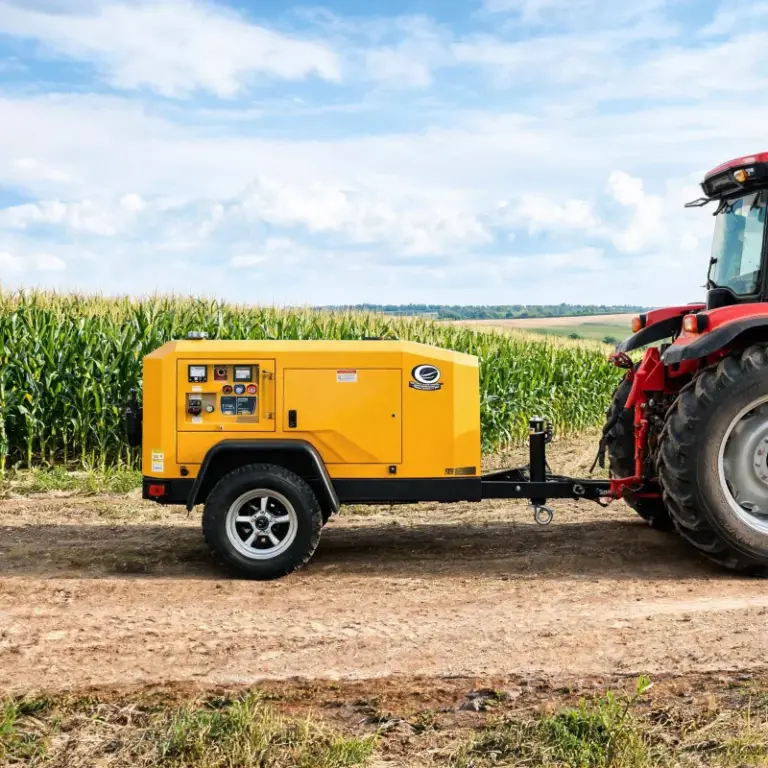
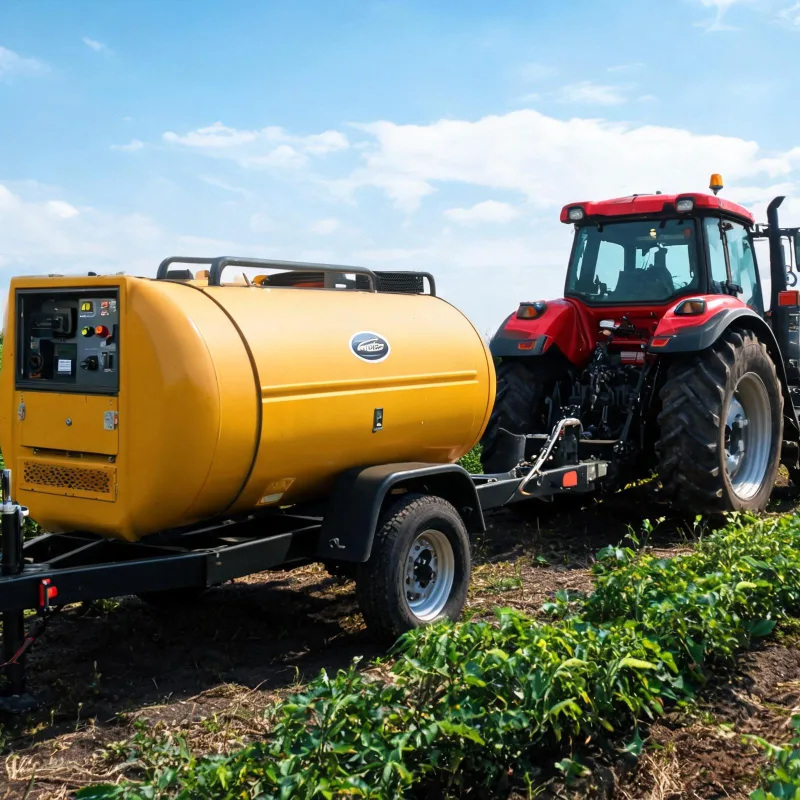
Large scale farming operates differently from small construction or other mobile work. Most of your air demand is spread across disconnected plots, and you will almost never run all possible air-powered tools at the same time. Peak demand only occurs less than 15% of total operating hours. Oversized units add more than extra upfront cost. Heavier units put extra strain on your standard farm towing vehicle, leading to faster chassis and tire wear that adds maintenance cost over time. 2023 data from the Journal of Agricultural Engineering shows oversized units idle 60% of the time, boosting overall fuel consumption by 25% compared to correctly sized units. If you need to move the unit across public roads between plots, a heavier unit may also fail local weight and braking requirements, adding compliance risk.
The Correct Sizing Boundary For Your Operation
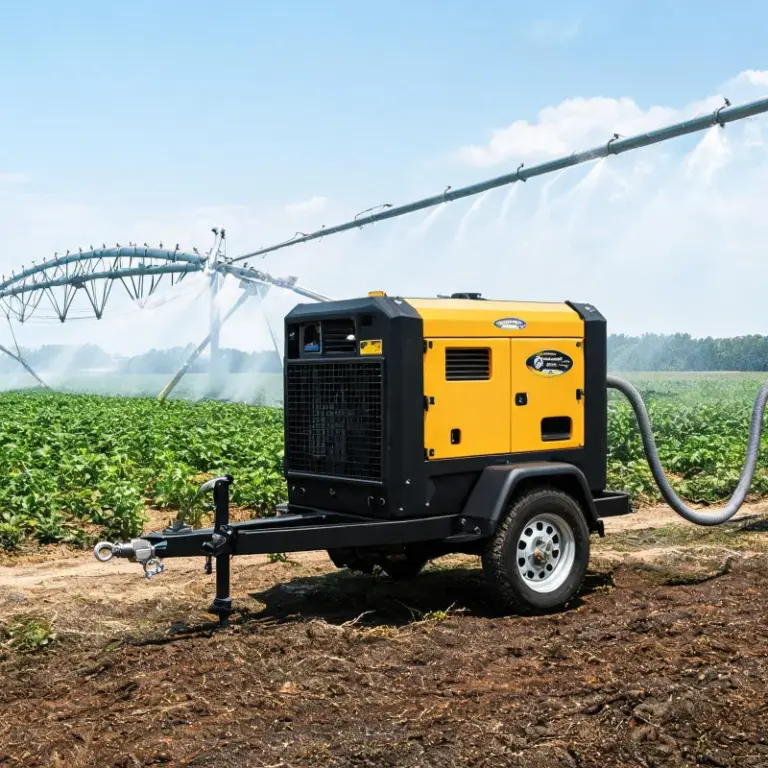
Start by adding up the continuous air demand of every tool you will run at the same time during normal operation. Do not add in tools that you only use one at a time, or on rare occasions. Add 10% redundancy to that total to cover unexpected peak use. That is your target continuous output. Next, check the maximum towing weight of the vehicle you will use to move the unit. Never exceed that limit, even if the output matches your demand. OSHA’s 2021 mobile farm equipment standards require functional braking on all towed units that exceed 3,000 pounds, so confirm this feature is included if you fall into that category. One hard boundary: if all your air demand is at fixed locations like barns or processing facilities, do not buy a towed unit. This is a clear misapplication of the product, and you will waste money on mobility you never use.
When Does A Larger Unit Actually Make Sense
A larger unit is only justified in two specific scenarios for large agriculture. First, if you operate a concentrated orchard or nursery where you run multiple air-powered pruning or harvesting tools at the same time across multiple crews. Second, if you share the unit across multiple neighboring farms, and need to cover the maximum possible combined load for shared work. Even in these cases, do not go more than 20% over your calculated total load. Any extra beyond that is just wasted capital.
What To Verify Before You Finalize Your Purchase
Most manufacturers advertise peak output, not continuous output. Ask for the full output curve, and confirm your target output can be maintained for multi-hour operation. This is a non-negotiable check that many teams skip. Add two clauses to your purchase contract: first, confirm that the unit meets all local road and weight standards for cross-public-road travel. Second, set a maximum 72-hour turnaround for spare parts during your main farming season. Downtime during planting or harvest costs far more than any discount on a non-compliant unit.
Expert Insights
Matching sizing to actual concurrent load cuts long term operating cost by 20% | Jim Carter, Senior Farm Equipment Analyst
Further Reading
- Diesel Portable Air Compressor vs Electric for Farming: Farmer’s Selection Guide
- Which Air Compressor Fits Your Farm? Stakeholder Comparison for Agricultural Operations
- Fuel Efficient Mobile Air Compressor for Long Distance Mining Drilling
- Compact Lightweight Diesel Mobile Air Compressor for Small Engineering Teams
- Two Stage Compression Diesel Mobile Air Compressor for Deep Well Drilling
- Silent Box Type Diesel Mobile Air Compressor for Urban Municipal Construction
- How to Select a Diesel Portable Air Compressor for Commercial Farming
- Aligning Stakeholder Needs When Selecting a Towed Unit for Farm Spray Pressure Boosting
About the Editorial Team
Related Reading: Step-by-Step Upgrade Path for Farm Mobile Air Supply to Meet Sustainable Goals
Frequently Asked Questions
What size of towed air unit do I need for 1000 acre farming?
Calculate total continuous demand of concurrently running tools, then add 10% extra redundancy for peak use.
Do I need to meet road safety rules for a towed unit?
Yes, if you move the unit across public roads between plots, compliance is mandatory.
Is oversizing a major problem for farm operations?
It increases upfront cost by 30-40% on average, raises fuel use and strains your towing vehicle.
When should I skip a towed mobile unit?
If all your air demand is at fixed locations like barns, a stationary unit works better.
Can I share a towed unit across multiple farms?
It works well for most cases, just size it for the maximum combined load you will run.