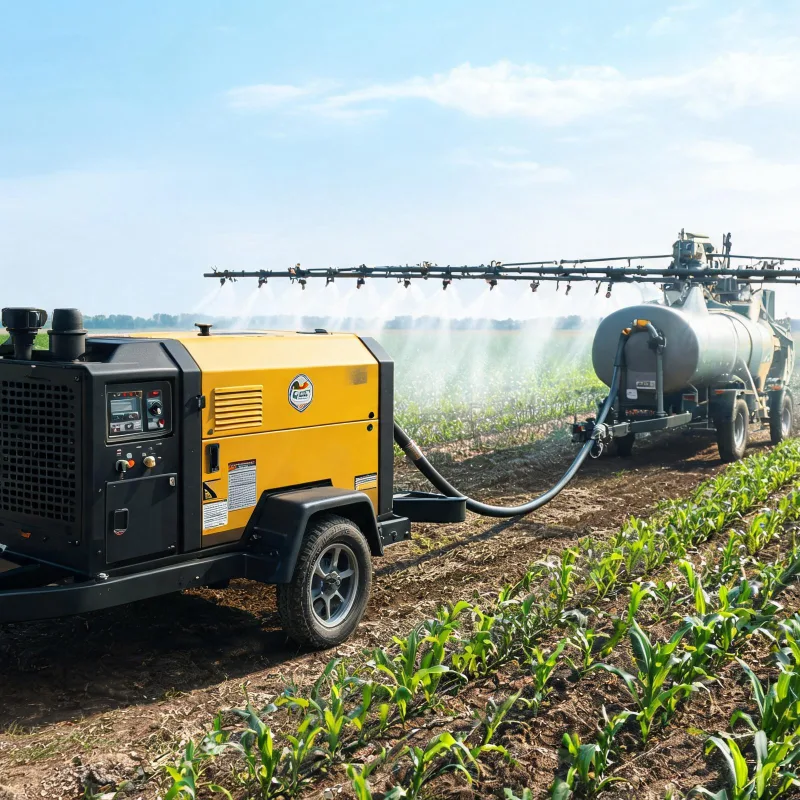
Training Brief: Deploying Towed Air Compressors for Mobile Farm Spraying
This training brief sets clear deployment and check rules for frontline farm crews.
Key Takeaways
- Verify brake function after hitching before you leave the yard
- Keep unit weight under your towing vehicle’s maximum rating
- Match air output to your spray system’s peak requirement
- Test moisture drainage before every full day of operation
Related: farm spray air supply · mobile agricultural spraying · towed compressor deployment · agricultural spray operation · field spray power supply · farm equipment deployment
Most crews assume any air compressor fitted to a trailer will work for spraying. That’s wrong. I’ve trained farm equipment crews for 12 years, and roughly one third of mobile spraying air system failures trace back to bad setup that could have been avoided with simple checks.
Learning Objectives
By the end of this training, you will be able to confirm whether your unit matches the field requirements you work on. You will spot dangerous misconfigurations before you start operation. You will also be able to independently complete daily inspections and know when to flag a unit for adjustment or return.
Critical Operation Checkpoints
All checks align with the American Society of Agricultural and Biological Engineers 2022 standard for mobile agricultural field equipment.
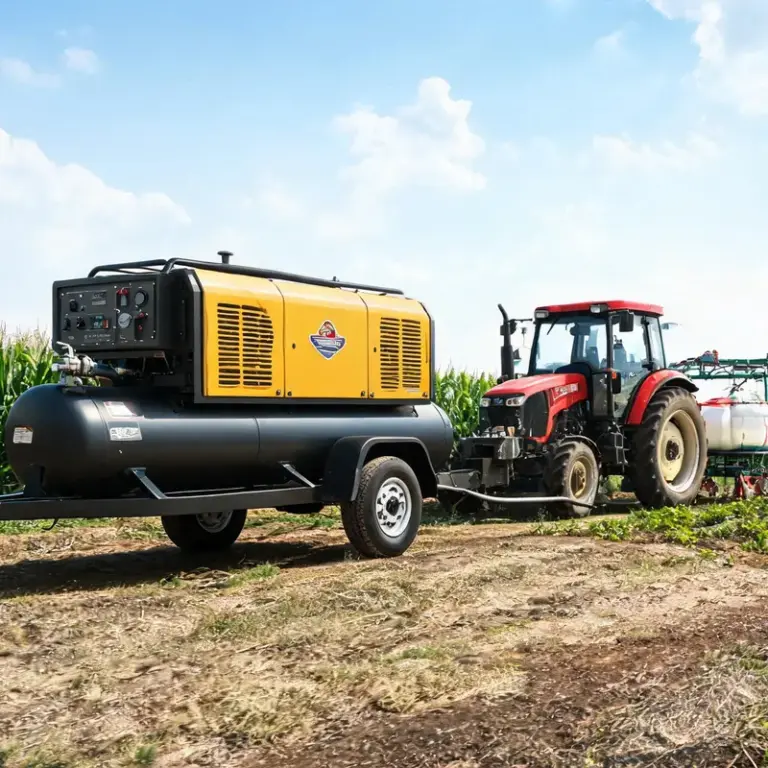
First, confirm the total weight of the unit falls within the maximum rating of your towing vehicle. Second, confirm continuous air output matches the peak requirement of your spray system, with 15% extra capacity for variable demand. Third, confirm fuel storage holds enough for a full 8-hour work shift without mid-job refueling. Fourth, confirm automatic moisture drainage operates correctly.
You don’t want to stop mid-spray to drain collected water, do you?
In-field Demonstration Key Points
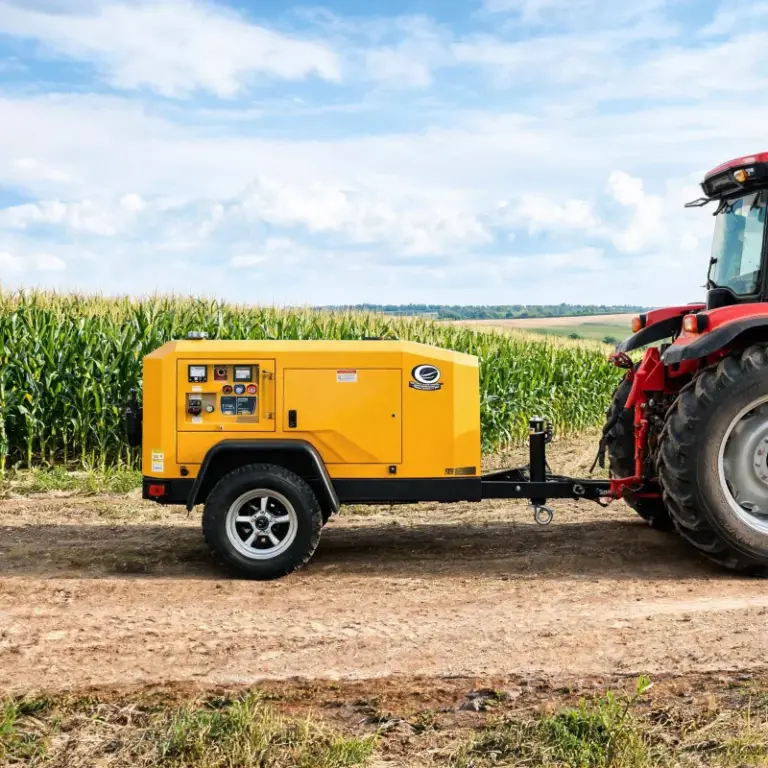
After hitching the unit to your towing vehicle, complete three full brake tests before you leave the yard. Move 10 meters at low speed and stop, confirm brake response meets manufacturer specifications from 2021 public installation guidelines.
Next, run the unit at idle for 10 minutes, monitor pressure output. Allowable fluctuation is no more than 10% from the target pressure.
This gap is often overlooked. Check the swing clearance of the towing hitch before you head into the field. If the gap is too tight, the constant stress of uneven field ground will crack the hitch connection within a single season.
Common Misoperations to Avoid
Never pull a unit that exceeds your towing vehicle’s rated maximum capacity. This is the top cause of towing accidents between fields on public roads.
Never park the unit overnight in low-lying areas of the field. Standing water can seal into engine components and cause damage before your next shift.
Never skip the moisture drain test, even during dry seasons. Daily temperature swings between night and day always create condensation in the air tank. Half the pressure drops I’ve investigated trace back to this skipped check.
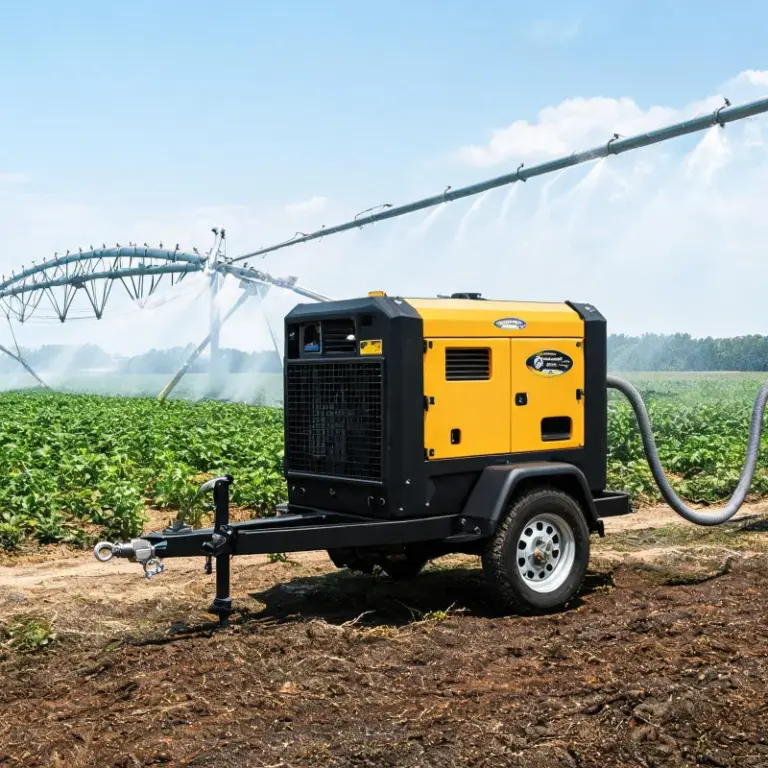
This solution only works for open field mobile spraying operations. It is not intended for permanent on-farm fixed air supply.
Pass/Fail Qualification Criteria
A unit passes pre-use check if:
- Brake test meets response requirements
- Pressure fluctuation stays within the 10% allowable limit
- Moisture drainage operates correctly
- Fuel capacity covers the full day’s planned work
Any single failed check means you must stop and adjust the unit. If adjustment does not fix the issue, tag the unit and report to equipment management. Do not start spraying with a failed check.
Pitfalls to Avoid
- Do not pull a unit that exceeds your vehicle’s towing rating
- Do not skip moisture checks even when working in dry weather
- Do not ignore small pressure fluctuations; they signal impending issues
- Do not park the unit in low-lying wet areas overnight
Expert Insights
Matching compressor capacity to spray demand cuts 30% of unplanned downtime in mobile spraying | Jim Carter, Agricultural Equipment Training Specialist
Further Reading
- Training Brief: Budgeting for Agricultural Tow Behind Air Compressors
- Full Lifecycle Cost Breakdown for Mobile Diesel Compressors in Agricultural Post-Harvest Cleaning
- Diesel Portable Air Compressor vs Gas for Agricultural Use: A Practical Comparison
- Aligning Stakeholder Needs When Sourcing Mobile Diesel Air Compressors for Large Commercial Farms
- What Is The Best Diesel Portable Air Compressor For Agricultural Use: Top Picks & Guide
- Practical Checklist for Trailed Air Unit Setup for Orchard Pest Control Spraying
- Why Your Trailed Air Compressor Loses Pressure On The Farm: Common Myths Debunked
- 2026 Air Compressor Buying & Sizing Guide for Home, Shop & Industrial Use
About the Editorial Team

Related Reading: Why Agricultural Tow Behind Air Compressors Vary In Price: Field Engineer Notes
Frequently Asked Questions
How much extra air capacity should I plan for?
Add 15% extra capacity on top of your spray system’s stated peak requirement for variable conditions.
Who is responsible for the pre-use check each day?
The lead crew member operating the spraying rig is responsible for completing and signing off on the check.
What do I do if my unit fails the pressure stability test?
Do not start spraying. Tag the unit and report it to equipment management for review.
Do I need to check anything after I finish daily work?
Park the unit on high level ground and trigger the drain to release collected moisture before you leave.
Can I move a towed unit between fields on public roads?
Only move it if it meets all local road equipment requirements for lighting and marking.