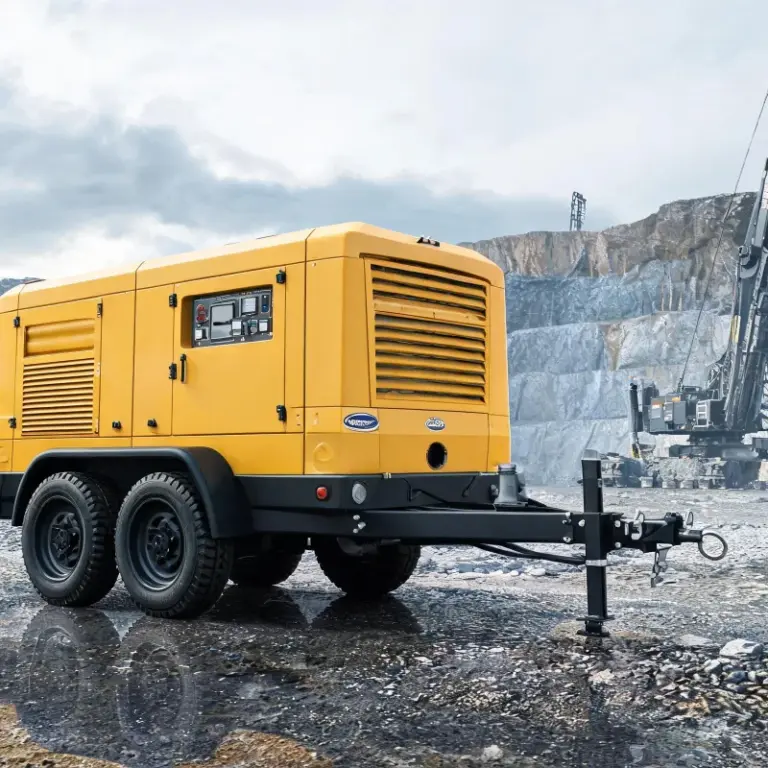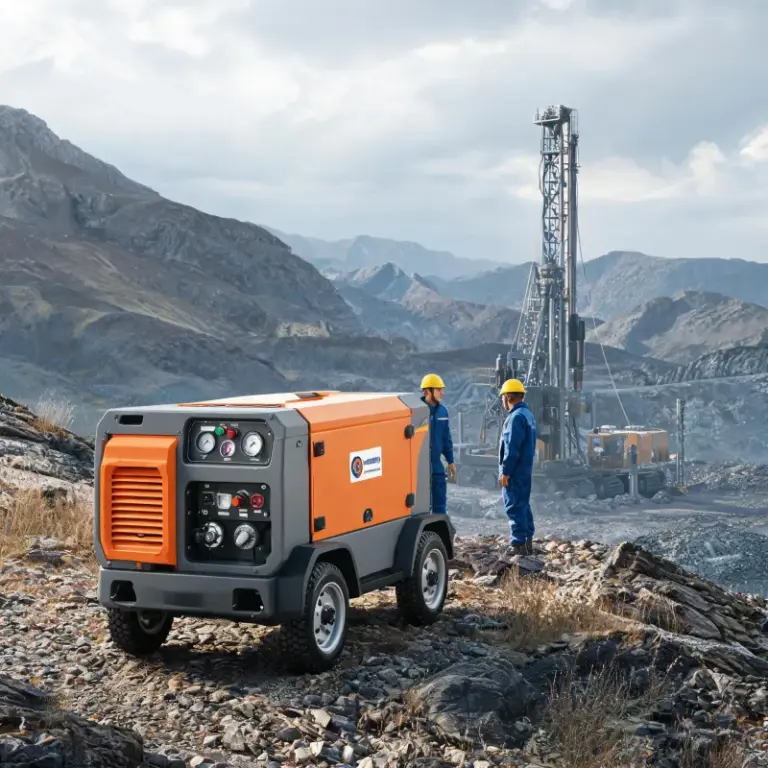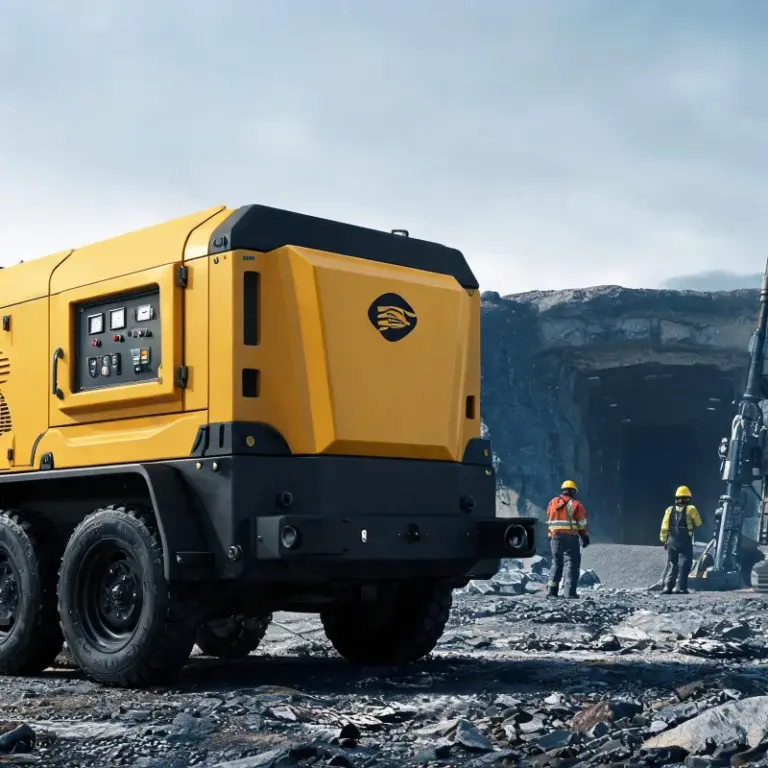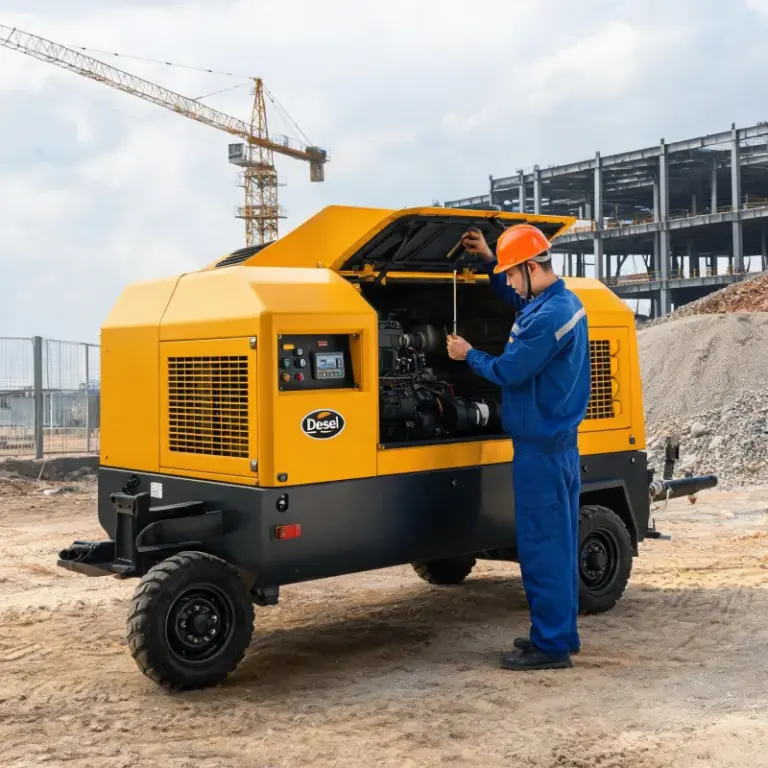
Training Brief: Deploying Oil Free Portable Air Compressors for Off-Grid Mineral Exploration Drilling
Master deployment and operation of oil-free compressors for remote off-grid mineral drilling
Key Takeaways
- Follow 2022 IMMA environmental standards for no oil leakage at remote sites
- Complete all pre-deployment checks before anchoring and connecting the unit
- Drain tank moisture after every 12-hour shift to prevent internal corrosion
- Any missed lockout step during assessment results in an automatic fail
Related: remote site compressor deployment · off-grid drilling power needs · oil-free compressor operation · mineral exploration drilling gear · remote site equipment checks · drilling air supply standards
Last quarter I stood on a 3800m elevation exploration site in the Rockies, watching a crew dig out a failed compressor from 6 inches of wind-blown dust. The site had been off-grid for 12 days, and the wrong setup cost them 3 full days of production. That’s why this training matters.
What will this training help you achieve?
You will leave able to correctly deploy, inspect and shut down your unit to avoid 90% of remote site failures.
This training is for front-line drilling crew and site supervisors. By the end, you will know how to match compressor output to drilling demand, spot pre-operation faults that cause downtime, and correct the most common missteps that lead to early failure. We follow the 2022 International Mining and Minerals Association (IMMA) environmental standards for remote exploration, which require no oil leakage into ground water at off-grid sites.
What are the non-negotiable on-site rules?
Follow these rules every time you set up or service the unit.
First: Place the unit 10 meters upwind of the drilling rig to avoid dust intake. High dust concentration at remote sites clogs intake filters 3x faster than lower-exposure job sites, per 2023 Compressed Air and Gas Institute (CAGI) field data. Second: Level the base within 2 degrees of horizontal. Unlevel bases cause uneven seal wear that leads to failure in 10 to 14 days of continuous operation. Third: Connect only to power sources within 10% of the unit’s rated voltage. Variable solar or generator output at off-grid sites is the top cause of motor burnouts. Fourth: Lock out the power supply before any inspection, even a 30-second filter check. Fifth: Drain collected moisture from the tank at the end of every 12-hour shift.
Cut corners here, and you’ll pay for it later.
What core steps do you need to demonstrate?
We will walk through pre-deployment check, connection, and post-shift shutdown step by step.
First, pre-deployment: Walk around the unit to check for cracked hoses or loose fasteners. Check the intake filter for dust buildup; if you can see through less than 50% of the filter surface, replace it before set up. Don’t wait for a pressure drop to swap filters. Next, placement: Confirm the upwind location and level base before anchoring. If the ground is soft, lay a 12mm thick steel plate to spread the weight—soft ground shifts overnight, which can throw the unit out of level. Next, connection to the drill: Check the pressure rating of the feed line before connecting. The unit’s output pressure must match the drill’s requirement within 5 psi. Finally, shutdown: Turn off power, bleed all remaining pressure from the line and tank, then close the main outlet valve. The 2021 OSHA remote site equipment safety standard requires full pressure bleed after every shutdown to prevent accidental discharge during next use.
What common mistakes cause unplanned failure?
Most failures at remote sites come from avoidable missteps, not bad equipment.
First mistake: Running the unit with a clogged filter to save time. A clogged filter reduces output by 15% and increases fuel or power consumption by 20%, which strains the motor and leads to burnout halfway through a drill run. There’s no quick fix for this in remote locations—you can’t borrow a filter from the next site 100km away. Second mistake: Ignoring unusual vibration. Minor vibration at start up is normal, but if vibration gets strong enough to rattle the control panel, shut down immediately. Vibration means loose mounting or worn seals, and running it will crack the tank manifold. Third mistake: Leaving the unit exposed overnight without a cover. Even in dry seasons, overnight dew builds up inside the intake and causes rust on internal components over time.
This training applies only to units deployed for seasonal mineral exploration drilling of less than 6 months. If you are setting up a permanent production operation, you need additional training on cold weather insulation and long-term corrosion protection, which this brief does not cover.
You really don’t want to hike 5km for a replacement part at 2am, do you?
What is the pass/fail standard for this training?
You pass if you complete all required checks and follow all safety rules during your practical assessment.
For written assessment, you need to correctly name three pre-deployment checks and two common missteps. For practical assessment: You must correctly select the right placement, complete the pre-start check, level the base, connect the line, and complete shutdown with full pressure bleed within 20 minutes. Any missed lockout step is an automatic fail, per OSHA requirements. Any failure to drain moisture at shutdown results in a retest.
Implementation Checklist
- Pre-deployment walkaround inspection
- Confirm upwind placement and level base
- Check filter condition and replace if clogged
- Connect power and verify voltage stability
- Pressure test the feed line before operation
- Drain tank moisture post-shift
- Lock out power before any inspection
Pitfalls to Avoid
- Do not skip filter replacement to save time on site
- Do not operate an unlevel unit to speed up set up
- Do not leave the unit uncovered overnight without protection
- Do not ignore unusual vibration during operation
Glossary
- Off-grid: A site with no connection to centralized utility infrastructure
- Oil-free compression: Compression that uses no lubricating oil in the chamber
- Pressure bleed: Releasing remaining air from the tank and line after shutdown
Maintenance Tips
- Inspect filter condition every 48 hours of operation
- Tighten all mounting bolts once per week
- Check seal condition for wear every two weeks
- Store extra filters in a sealed waterproof container on site
Expert Insights
Remote site equipment success depends on following simple rules, not fancy specs
— Jake Moore, Senior Drilling Operations Supervisor
Further Reading
- Buyer’s Brief: Picking High Pressure Trailed Compressors for Deep Mineral Drilling
- What Size Diesel Portable Air Compressor For Water Lubricated Oil-Free Screw Air Compressors
- How Site Constraints Guide Towable Air Compressor Selection for Mine Shaft Sinking Drilling
- Selecting a Newly Upgraded Towable Air Compressor for Mineral Exploration Drilling Projects
- Full Lifecycle Cost Breakdown for Portable Compressors in Mountain Mineral Exploration Drilling
- Pre-Purchase Checks for Lower Lifecycle Cost of Towable Air Compressors for Drilling
- Full Lifecycle Cost Breakdown for High Pressure Towable Air Compressors in Deep Hole Drilling
- 2024 New Diesel Portable Air Compressor for Mine Site Drilling: Trends & Top Picks
About the Author

Frequently Asked Questions
What’s the biggest benefit of an oil-free design for off-grid exploration?
It eliminates the risk of lubricant leakage that can trigger project shutdowns and fines under modern mining environmental rules.
Do I need to carry extra filters for remote off-grid sites?
Yes. Plan to carry one extra filter for every 7 days of operation. Remote site dust clogs filters much faster than standard estimates predict.
Can I run the compressor on generator power at off-grid sites?
You can, but you must confirm the generator’s output voltage is stabilized within 10% of the unit’s rated voltage. Unstable voltage is the leading cause of motor failure in off-grid applications.
What do I do if I notice unusual vibration during operation?
Shut down the unit immediately, lock out power, and inspect mounting bolts and intake seals. Tighten loose bolts or replace damaged seals before resuming operation. Do not continue running to finish a drill run.
When is this equipment not the right choice?
It is not suitable for permanent long-term production drilling that requires 24/7 operation for more than 6 consecutive months. Permanent sites require stationary units with additional corrosion protection.