Which Air Compressor Fits Your Farm? Stakeholder Comparison for Agricultural Operations
Match your team’s priorities to choose between mobile and fixed air solutions for farm work.
Key Takeaways
- Procurement prioritizes upfront cost and lead times, while field teams need flexible air access
- Over 60% of mispurchased agricultural air systems stem from unaligned team needs, per 2023 AEM data
- Fixed units do not work for large farms with multiple remote work sites
- All units must meet OSHA 2023 noise exposure standards for farm workplaces
Related: farm compressed air · agricultural operation needs · farm equipment selection · mobile air supply · fixed air system · farm power requirements
Most farms end up buying the wrong air compressor because they only vote on upfront cost, not stakeholder needs. I’ve spent eight years coordinating agricultural equipment purchases for regional farm groups, and I’ve seen more than one unit sit unused in a shed because no one asked the field crew what they needed.
Conflicting Priorities Across Stakeholders
Different teams on your farm have fundamentally different goals when selecting a new air compression system. These goals rarely align on the first pass, and skipping the alignment step leads to costly mistakes.
A 2023 report from the Association of Equipment Manufacturers found 62% of incorrectly sized or placed agricultural air systems trace back to unaligned cross-team requirements. No single group gets everything they want, but you can identify non-negotiable rules early to narrow options.
Procurement teams are held to annual capital budgets, so they will push for the lowest upfront cost possible and shortest lead times to hit purchasing targets. Maintenance teams are measured by unplanned downtime, so they prioritize units that require less frequent service and have easy access to replacement parts. Field crews just need the unit to work where they need it, when they need it, to keep planting, maintenance or harvest on schedule.
Stakeholder-Specific Hard Requirements
Every group has non-negotiable rules that should eliminate mismatched options immediately. No tradeoff is worth violating these requirements.
For procurement, the USDA 2022 Agricultural Equipment Purchasing Guide requires a minimum one-year full unit warranty for any capital purchase over $5,000. Lead times must align with your off-season maintenance window, to avoid delaying work during critical growing or harvest periods. Any price quote must include all required installation or hookup fees to avoid hidden costs later.
For maintenance teams, stationary units must match the available power capacity of your existing farm electrical system. Any unit that requires upgrading your entire electrical grid adds unplanned capital cost that rarely gets accounted for upfront. Mobile units require accessible service parts from regional suppliers, to avoid waiting weeks for a repair mid-season.
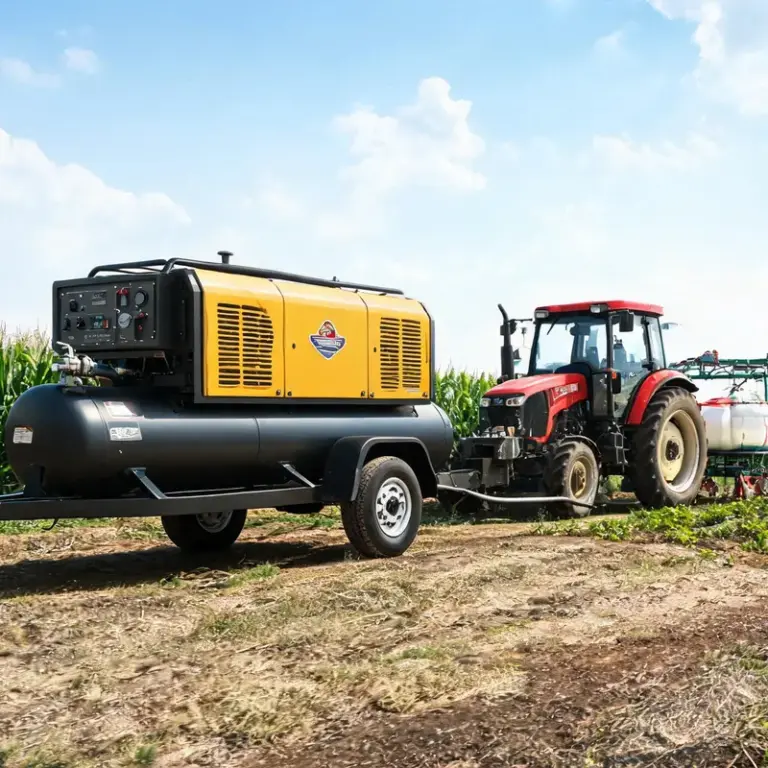
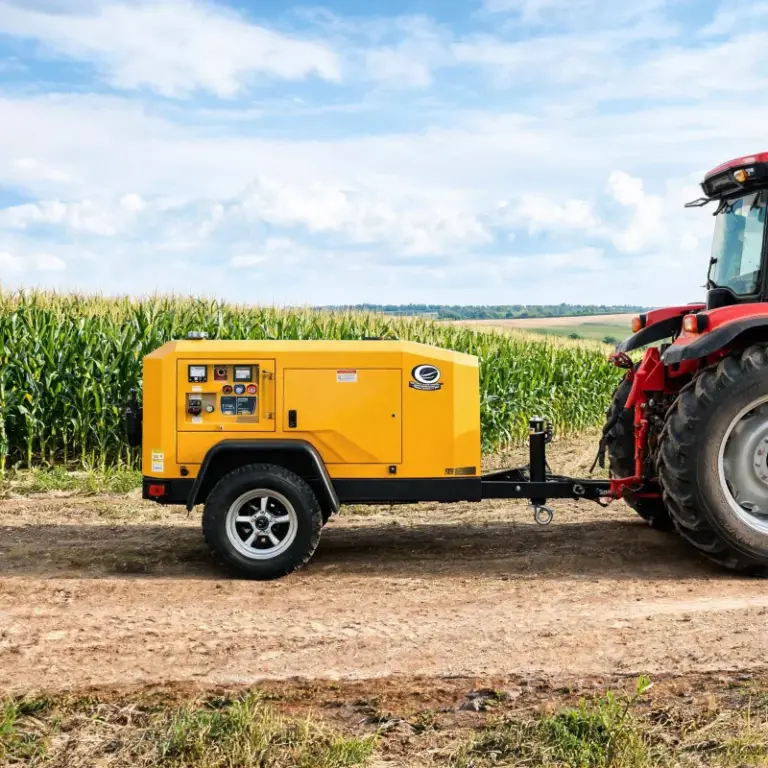
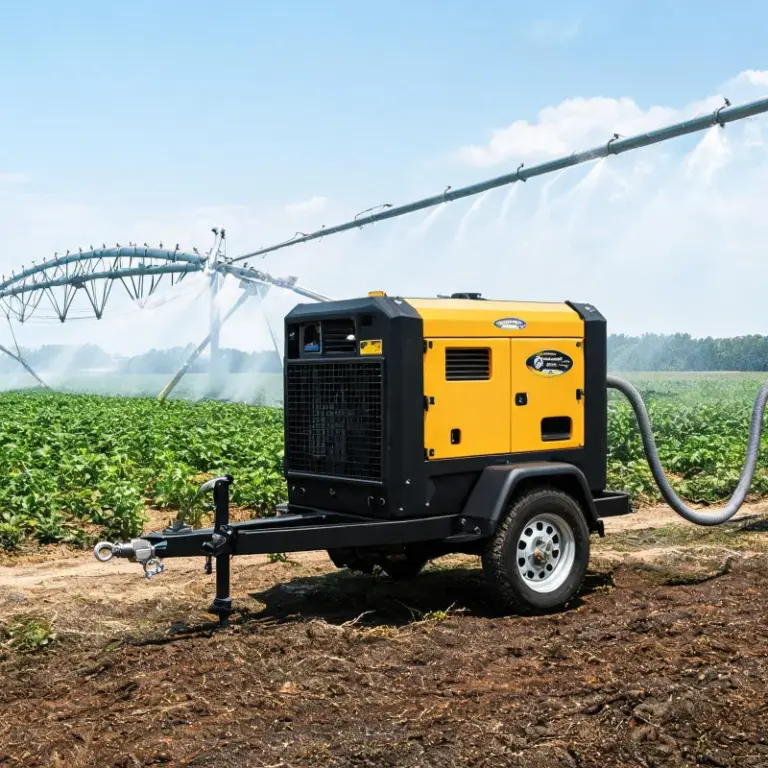
For field operations, the unit must deliver consistent output pressure that meets the demand of your highest-requirement daily task. If you need air power for multiple remote work sites spread across your property, you need a unit that can move between sites reliably.
Negotiable Tradeoffs For Cross-Team Alignment
Once you eliminate options that fail any non-negotiable requirement, you can work through tradeoffs to find a middle ground. No option is perfect for every team, but you can find one that works for all.
A common tradeoff: if procurement needs to cut upfront cost, maintenance can agree to a slightly shorter service interval if parts remain readily available. If field operations don’t need daily remote access, they can agree to move tools to a central stationary unit once or twice a week, to cut overall cost.
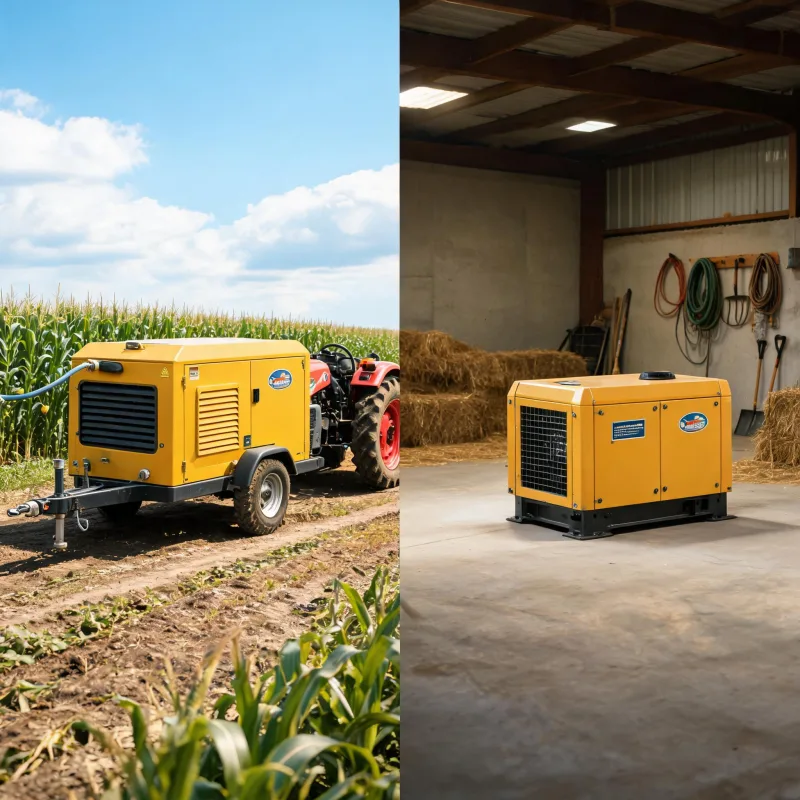
There are hard lines no tradeoff can cross. If your farm spreads across more than 100 acres of remote plots with no permanent power access, a fixed unit will never meet your field needs. If all your air compression work happens at a central workshop or grain storage facility, a tow behind unit is an unnecessary expense that adds extra maintenance work for no gain.
Unified Acceptance Criteria For Final Delivery
Once you select an option, you need a clear set of acceptance criteria to check before you sign off on delivery. This avoids disputes after the unit is installed and the supplier has left.
For stationary units, test output pressure at full load to confirm it matches the rated specification. Check that noise levels meet OSHA 2023 workplace exposure limits for agricultural settings, to avoid long-term hearing risk for your team. Confirm all electrical connections comply with local national electrical codes before you power it on full time.
For mobile units, test the hitch and towing system on your farm’s dirt roads to confirm it handles the terrain without excessive vibration. Test output pressure at the maximum rated engine speed to confirm it holds consistent pressure under load. Confirm all safety markers meet regional highway towing requirements if you plan to move it on public roads.
Align On The Final Decision
Once all checks are complete, share the results with all stakeholders before finalizing the purchase. Document the tradeoffs each team agreed to, so there’s no confusion after delivery. This takes 15 minutes of meeting time, and it avoids months of frustration after the unit arrives.
Decision Guide
| Stakeholder | Non-negotiable Requirement | Acceptable Tradeoff |
|---|---|---|
| Procurement | Lead time under 8 weeks, minimum 1 year full warranty | Adjust upfront cost against 5-year total ownership cost |
| Maintenance | Complies with current safety standards, readily available service parts | Flex on extended service interval requirements |
| Field Operations | Consistent output pressure for highest-demand tasks | Adjust required range of mobility |
| ———– | ————————– | ——————- | | Procurement | Lead time under 8 weeks, minimum 1 year full warranty | Adjust upfront cost against 5-year total ownership cost | | Maintenance | Complies with current safety standards, readily available service parts | Flex on extended service interval requirements | | Field Operations | Consistent output pressure for highest-demand tasks | Adjust required range of mobility |
Further Reading
- Single Stage vs Two Stage: Which Portable Diesel Air Compressor Fits Your Job?
- New Diesel Portable Air Compressor for Agricultural Operations: 2024 Trends & Picks
- Air Compressor Buying & Sizing Guide – Step-by-Step Selection for Buyers
- How to Choose a Diesel Portable Air Compressor for Water Lubricated Oil-Free Screw Systems
- Selecting a Newly Upgraded Towable Air Compressor for Mineral Exploration Drilling Projects
- Diesel Portable Air Compressor for Chemical Plant Maintenance Contractors
- Evaluating A Diesel Portable Air Compressor For Complete Compressed Air System Design
- How to Select a Diesel Driven Portable Air Compressor Matched to Precision Compressed Air Filters
About the Editorial Team
Related Reading: Common Mistakes When Selecting a Tow Behind Compressor for Large-Scale Agriculture
Frequently Asked Questions
What power range do most full-scale farms need?
Match output to your highest-demand task, most mid-sized farms need 10 to 30 horsepower for core operations.
A:Q:Can I modify a stationary unit to move later?
A:Modifying a stationary unit to be mobile voids most manufacturer warranties and creates major safety risks, so it is not recommended.
A:Q:Which option holds better long-term value?
A:Well-maintained mobile units hold value better, as they work for a wider range of farm operations.
A:Q:Do both options connect to farm grid power?
A:Stationary units connect directly to grid power, most mobile units use internal combustion engines for remote use.
A: