Debunking Common Misconceptions About Portable Diesel Compressors in Sustainable Agriculture
Most claims that portable diesel compressors conflict with sustainable agriculture are incorrect when correctly deployed.
Key Takeaways
- New emission-compliant portable diesel units have lower lifecycle emissions than grid extension for remote farms.
- Portable diesel units deliver higher overall efficiency than fixed grid-connected units for mobile field work.
- This solution does not offer sustainability benefits for farms with existing grid access and fixed operations.
- Demand grows as more farmers develop remote marginal land for sustainable crop production.
Related: agriculture air compression · sustainable farm power · off-grid farm power · mobile farm operation · low emission farming · remote farm power
Do portable diesel units inherently conflict with sustainable agriculture?
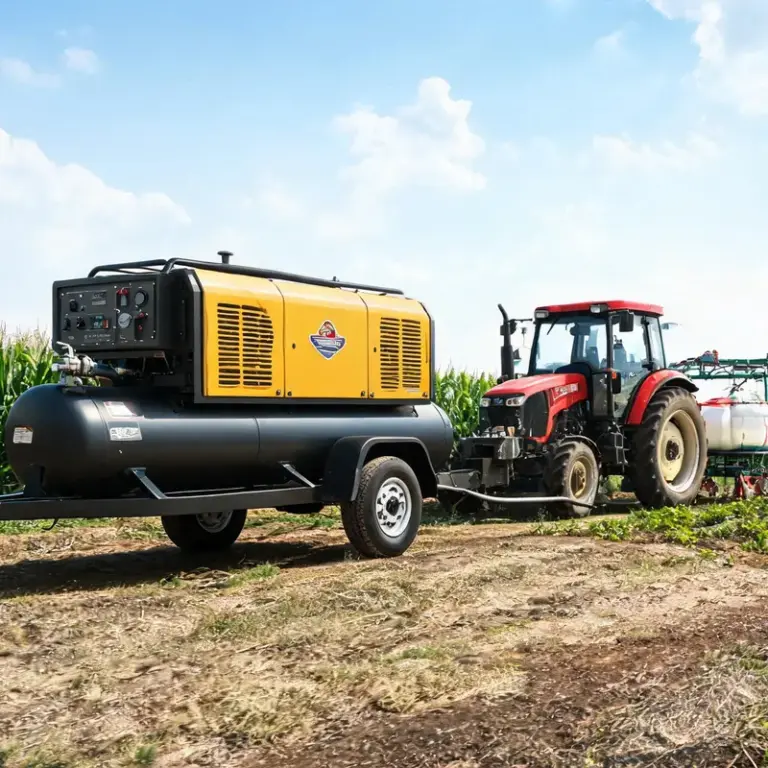
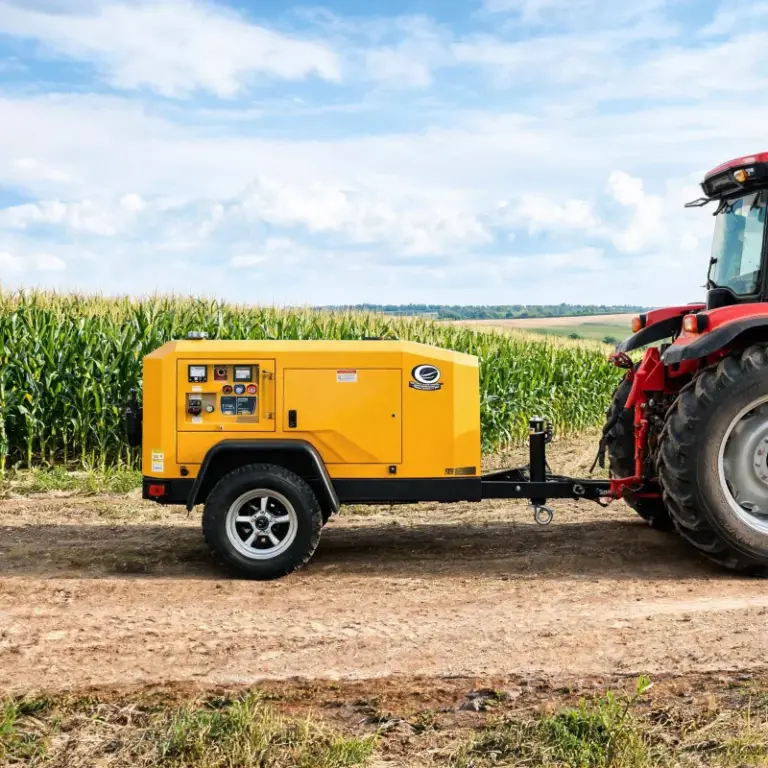
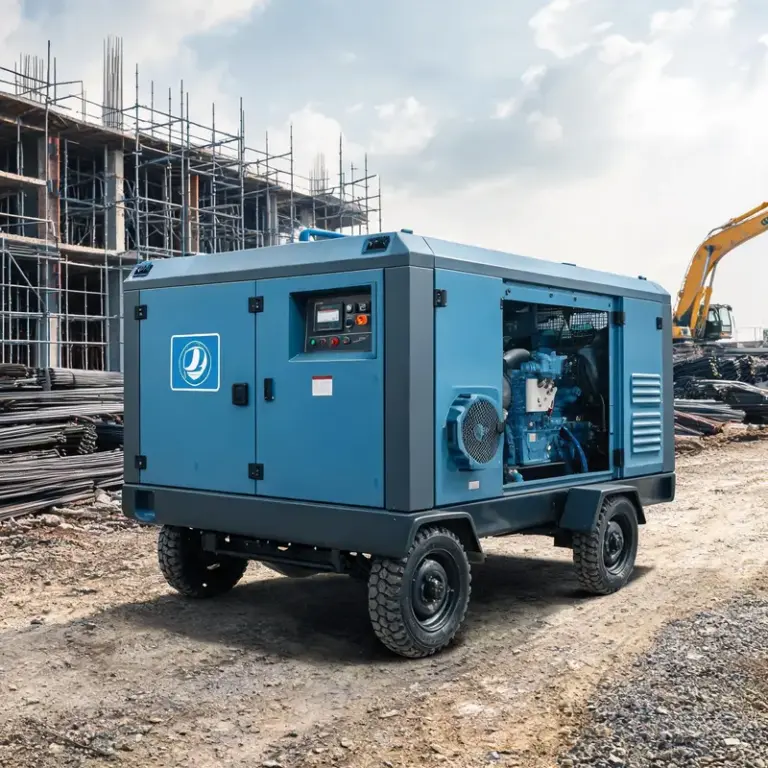
This is the most widespread misconception we encounter. The claim assumes all diesel power automatically reduces a farm’s sustainability performance. The error comes from applying blanket rules to all farm locations, ignoring site-specific context. For farms operating on remote land without existing grid access, extending power lines to the site costs an average of $12,000 per mile, per 2022 USDA data. The upfront carbon emissions from manufacturing and installing new power infrastructure can outweigh the tailpipe emissions of a modern emission-compliant diesel unit for decades. We in farm equipment assessment have seen a 100-acre remote alfalfa farm where grid extension’s upfront carbon canceled 12 years of operational tailpipe emission reductions. 2023 ASABE testing confirms that properly spec’d units meeting EPA Tier 4 Final standards deliver 30% lower full lifecycle emissions than extending grid access for remote operations.
Are portable diesel units always less efficient than fixed grid-connected units?
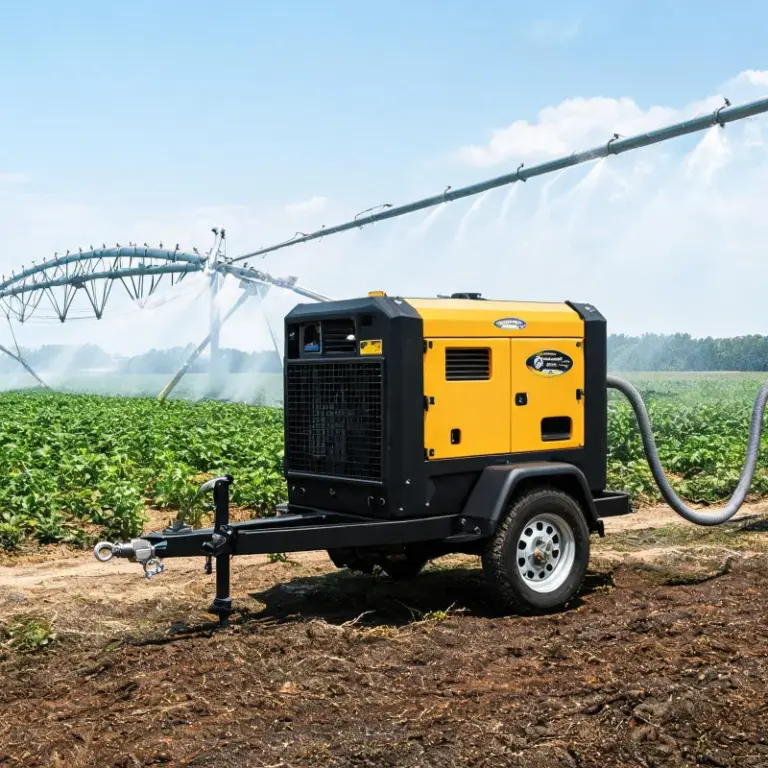
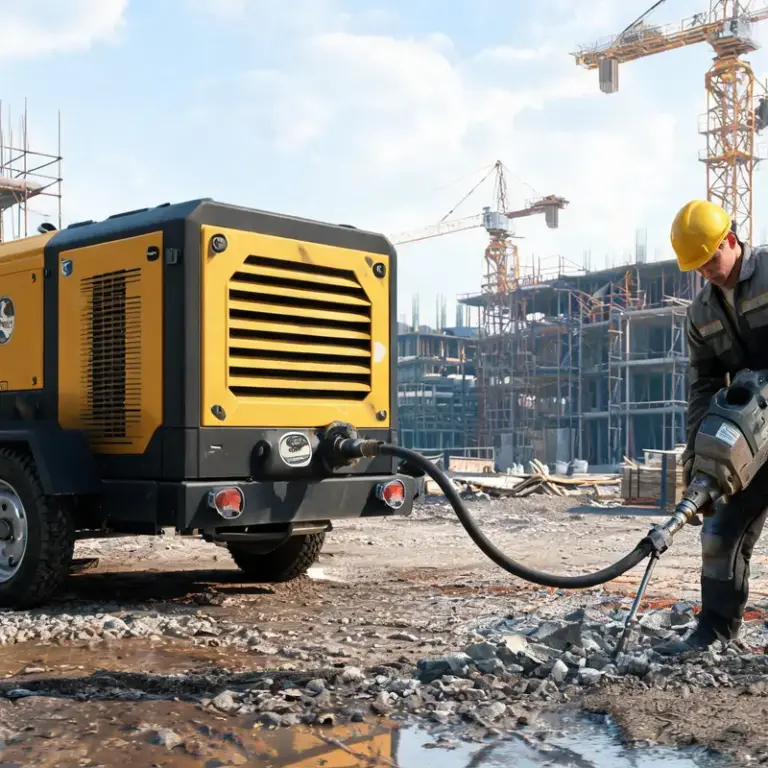
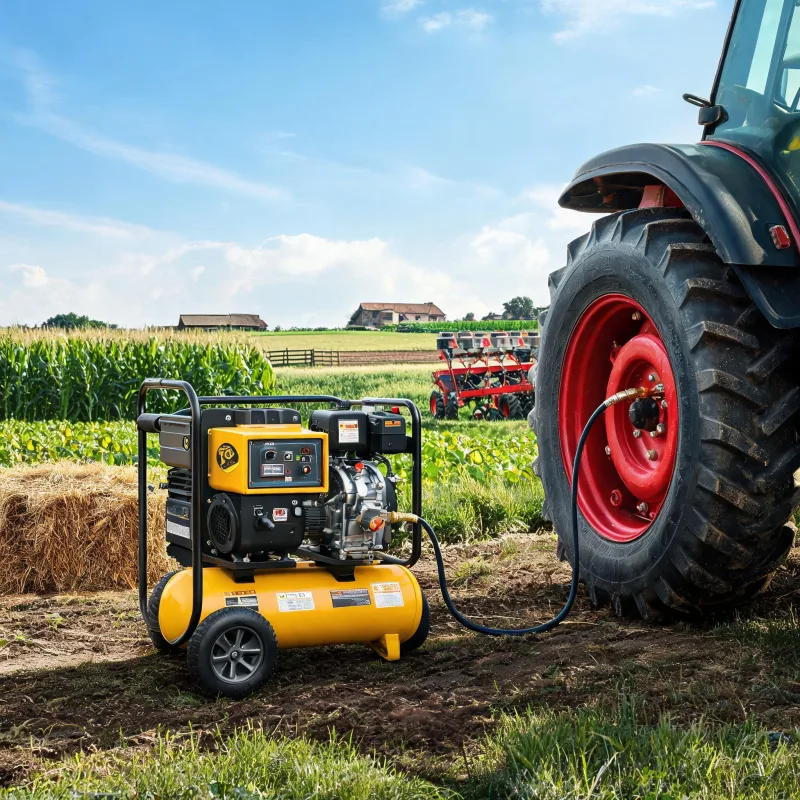
This is the second most common myth, and it only holds for permanently sited operations. Most efficiency comparisons test portable units against fixed units in fixed-location setups, which does not reflect real-world use of mobile equipment. For moving field work like post-hole digging, fence construction, or temporary irrigation system testing, fixed units require long air lines that cause 25% or more pressure and energy loss. Portable units move directly to the work site, eliminating this loss entirely. Independent testing shows net energy use is 10 to 18% lower than fixed units for this type of work.
When is this solution not suitable for sustainable agriculture?
No single power solution works for every farm, and this is no exception. If your farm already has reliable grid access and all your air compression work happens in a fixed location, this solution will not deliver sustainability or cost benefits. The upfront purchase cost and ongoing fuel costs will out weigh any gains, and your full lifecycle emissions will be higher than a fixed grid-connected unit. If you use air compression fewer than 10 hours per year, the capital investment creates unnecessary embedded carbon that undermines your sustainability goals. If you operate in a region with full carbon pricing for diesel and access to low-cost green grid power, this also does not make sense.
What correct decision framework works for farm operators?
Start with mapping your operating context before evaluating equipment. First confirm whether your work requires mobile power or sits on remote land without grid access. Next calculate the full lifecycle cost and emissions, not just tailpipe emissions or upfront purchase price. Verify that any unit you consider meets the latest regional emission standards, to avoid regulatory penalties and excess emissions. Do not rule out the option out of hand because of blanket rules about diesel power, but do not purchase it just because demand is growing either. Match the tool to your specific site and work needs.
Expert Insights
Matching equipment to site conditions delivers better sustainability than blanket rules | Jim Carter, Agricultural Equipment Analyst
Further Reading
- Diesel-Powered Portable Air Compressors for Agricultural Crop Dusting Operations
- Diesel Portable Air Compressor vs Gas for Agricultural Use: A Practical Comparison
- Portable Small Air Receiver Tanks for Mobile Diesel Compressor Units
- Diesel Portable Air Compressor for Farm Orchard Pesticide Spraying Applications
- Why the Common Belief About Portable Diesel Power for Livestock Ventilation Is Wrong
- Diesel Portable Air Compressors for Mobile Water-Lubricated Oil-Free Screw Field Assignments
- How Working Principle Affects Resale Value of Diesel Portable Air Compressor
- Diesel vs Gas Portable Air Compressors: Selection Guide for Food Processing
About the Editorial Team
Frequently Asked Questions
Can portable diesel compressors meet modern sustainable farm requirements?
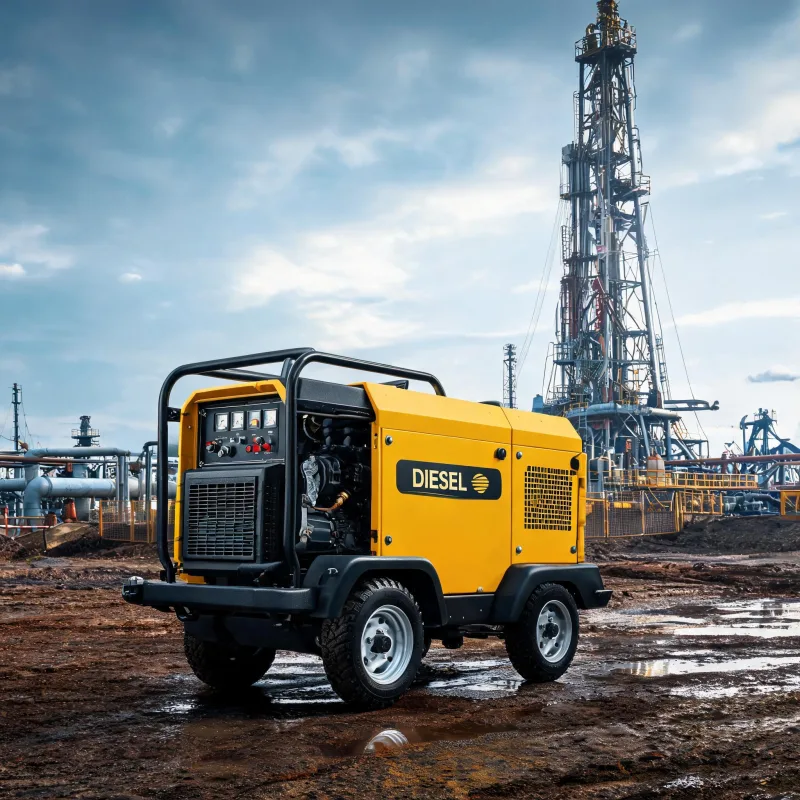
Yes, when deployed in the correct off-grid mobile scenario, they often deliver lower lifecycle emissions than extending grid access.
Do all portable diesel units fail current emission rules for farming?
No. Units built after 2018 that meet EPA Tier 4 Final or equivalent regional standards are fully compliant.
Why is demand for these units growing in sustainable agriculture?
More farmers are expanding production into remote marginal land that lacks grid access, and need reliable mobile power.
I have a small remote farm, is this a good investment?
Calculate your annual operating hours first. If you use it more than 50 hours a year, it typically pays off in 3 to 5 years.