Training Brief: CFM Output Differences Between Stationary and Mobile Diesel Air Compressors
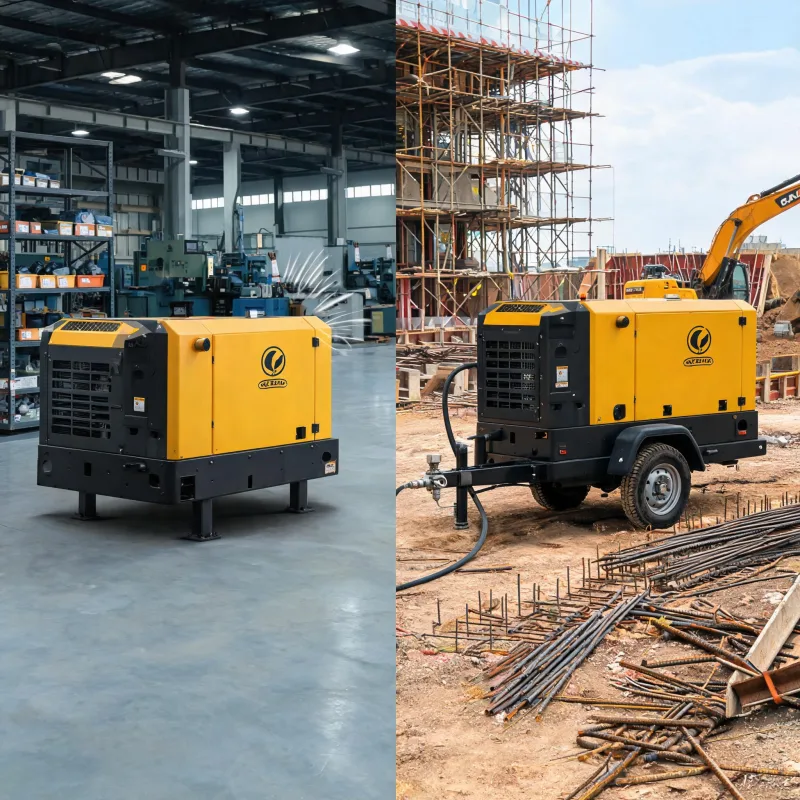
CFM output differs by design, load profile, and intended deployment for stationary and mobile diesel units.
Key Takeaways
- Stationary units deliver consistent CFM within 2% of rating under full load
- Mobile units drop steady CFM output by 10-18% from their peak rating
- Always test mobile units after 30 minutes of loaded run time before acceptance
- Specify steady CFM in contracts for mobile units used for continuous work
Related: compare compressor CFM · compressor output sizing · on-site compressor check · industrial air output · compressor selection · fixed CFM output
Learning Objectives
By the end of this session, you will be able to identify CFM output gaps between the two deployment categories, verify output during acceptance checks, and avoid mis-sizing for project requirements. We only cover diesel-powered units for off-grid industrial work here. No vague theory—all steps are actionable for on-site checks.
Key Verbal Cues
Memorize these two short cues for every site assessment. First: Stationary = steady state CFM. Second: Mobile = peak-rated CFM drops under sustained load. That’s the core difference you need to carry to every check. Got that?
Demonstration Key Points
Compressed Air and Gas Institute’s 2022 compressor performance standards show stationary units are rated for continuous CFM output at 100% load for 24/7 operation. Their output varies less than 2% across a full 8-hour run, thanks to fixed engine tuning and larger aftercoolers mounted on permanent foundations. Mobile units are sized for transient load use. Their rated CFM is measured at peak output only. Sustained load above 75% will drop actual CFM output by 10 to 18 percent, per 2023 public performance documents from three major global compressor manufacturers. Why the gap exists? Stationary units have dedicated cooling systems that don’t need to fit into a towable frame. Mobile units sacrifice cooling capacity and steady-state tuning to meet weight and size limits for road movement. When you test a mobile unit on site, run it at 80% maximum load for 30 minutes before measuring CFM. Don’t take the peak-rated sticker at face value.
Common Misoperations
The most common mistake I see on site is sizing a mobile unit 1:1 to match a stationary unit’s CFM rating for continuous use. If you need 100 CFM for 8 hours of continuous work, a mobile unit rated for 100 CFM peak will only deliver 85 CFM or less. That leads to slow production and premature engine wear. Another mistake is assuming higher engine horsepower equals higher steady CFM. A 150 hp stationary unit will consistently out deliver a 180 hp mobile unit in continuous load scenarios. Flag any mismatch between deployment type and required run time during pre-delivery checks. That’s an automatic fail for acceptance.
Acceptance Testing Checkpoints
First, for stationary units: Confirm CFM output is within 3% of the contract rating after 4 hours of continuous full load. Cross check against Compressed Air and Gas Institute 2022 rating standards for the unit model. For mobile units, contract ratings should always specify whether the CFM is peak or steady-state. If the contract only lists peak CFM, require the vendor to add a steady-state CFM guarantee for your typical load. Test mobile units after 30 minutes of 75% load. Reject any unit that delivers more than 12% below the required steady CFM for your application. This rule only applies to projects requiring more than 2 hours of continuous load. For short-duration work, peak CFM is an acceptable rating.
Pitfalls to Avoid
- Do not match CFM ratings between stationary and mobile units 1:1
- Do not accept contracts that only list peak CFM for continuous use applications
- Do not measure CFM immediately after starting a mobile unit
Further Reading
- Training Brief: CFM Sizing for Diesel Air Compressors on Large Construction Sites
- Why Accurate CFM Calculation Is Critical To Your Diesel Air Compressor Project
- New 2024 Diesel Portable Air Compressor: Practical CFM Calculation Tips
- How to Accurately Calculate CFM Output for High Pressure Diesel Driven Air Compressors
- How Shifting Large Industrial Project Requirements Change CFM Sizing for Diesel Powered Air Compressors
- How to Calculate CFM and PSI Requirements for Air Compressors
- Common Mistakes That Throw Off CFM Calculations For Diesel Air Compressors
- How to Accurately Calculate Required CFM for Diesel Air Compressors for Industrial Sites
About the Editorial Team
Frequently Asked Questions
Can a mobile unit ever match a stationary unit’s steady CFM output?
Only at very low total CFM requirements under 150 CFM. Larger mobile units still cannot maintain steady output equal to their peak rating due to cooling limits.
Where can I find verified CFM ratings for a unit?
Check the Compressed Air and Gas Institute 2022 performance database for most major models, or request certified test data from the vendor before signing a contract.
Does engine size affect the CFM output gap between the two?
The gap percentage stays roughly consistent across all engine sizes. Larger units have the same 10-18% drop in steady output for mobile designs.
What CFM rating should I write into a procurement contract for a mobile unit?
Always specify steady-state CFM at your expected continuous load, not just peak rated CFM, to avoid delivery disputes.